

"Have Fun with the Band": John Everist on Creating the Music for Monopoly: A Star Wars Movie

Exclusive Interview: The composer talks creating interactive music for Monopoly Star Wars: Heroes VS Villains, writing music for children, stepping out of John Williams' shadow, and why creative work should never be completely problem-free.
You wouldn't expect to find one of the most technically unusual Star Wars scores in a Monopoly game in the first place.
Composer John Everist initially had similar doubts.
When Ubisoft and Behavior Interactive approached him about Monopoly Star Wars: Heroes VS Villains, he envisioned a familiar board game with a Star Wars theme and elements already familiar to players.
This assumption did not stand up to scrutiny at the first meeting.
The game features new rules, unique character abilities, battles, cinematics, and a large selection of playable characters from both sides of the galaxy. More importantly, the developers didn't want to rely on existing Star Wars themes.
Everist needed to create an original musical concept that would organically fit into the atmosphere of the galaxy.
There was another difficulty: the project did not have the budget to record a live orchestra.Each instrumental performance had to be programmed using orchestral samples.
The result is nearly an hour of original interactive music designed to switch between heroes and villains, expanding and contracting with removable musical layers, and supporting family play without treating every dice roll as a deciding factor in the fate of the galaxy.
For readers who want to take a closer look at how the music systems fit into the overall concept of the game, ourfull review ofMonopoly Star Wars: Heroes VS Villainslooks at team structure, character abilities, combat, and the ever-changing events on the playing field.
The size of the character roster also became part of the musical challenge. Each side needed a strong personality without reducing every hero to flashy fanfares and every villain to menacing brass instruments. The game extends this playful contrast to the visual presentation of the characters, which we detail in ourcomplete guide to unlockable costumes in Monopoly Star Wars: Heroes VS Villains.
Everist is well acquainted with the large-scale music worlds.The GRAMMY-nominated, ASCAP Award-winning composer's credits include work on projects such as Star Wars Outlaws, Overwatch, The Lamplighters League, BattleTech, Shadowrun, and Destiny: Risingand GRAFT.
In this exclusive interview, Star Wars: Gaming spoke with Everist about the unexpected ambitions at the heart of Monopoly Star Wars: Heroes VS Villains, what Wilbert Roger II taught him about writing music for the Star Wars universe, and where he thinks generative AI should and shouldn't have a place in a composer's life.
This interview has been lightly edited for clarity and correct punctuation.

The musical challenge is much more complex than the Monopoly game suggests.
When you were first asked to write music for the game Monopoly Star Wars: Heroes VS Villains, what immediately attracted you to this project? Was there any particular creative opportunity that made you think this could be something more musically ambitious than what you might expect from a Monopoly game?
To be honest, I was a little hesitant at first.
I assumed it would be a simple remake of the Monopoly game, with a lot of direct permutations of existing themes and iconic tracks.
My fears were instantly put to rest when I met with representatives from Ubisoft and Behavior Interactive.They told me about all the new rules and mechanics, the abilities of the heroes and villains, the fight scenes, the cinematics, the depth of the playable character roster, and how this is a game specifically aimed at children.
They also told me that they don't want to use any of the existing themes from this universe.
They briefly mentioned their ideas for interactivity, which is always nice to hear when considering developing a new game.
We also didn't have the budget to record a live performance, which meant I would have to program the orchestra entirely myself using samples.
All this taken together seemed like an interesting challenge to me.
The orchestral language of Star Wars is all about the pleasure of playing with an orchestra. Combining this with fun, fast-paced gameplay, interactivity and kid-friendly appeal seemed like an exciting challenge to me.
This is a lighter, more playful Star Wars game than many of the ones you've worked on. How did this affect the tone of the soundtrack, and how did you manage to make the music exciting without making it feel like the fate of the galaxy is at stake?
At the beginning of the project, I wrote several fragments that significantly increased the emotional component.
I remember the team gave something like this: “This is great, but remember that this is for children and we don’t want to scare them!”
I really liked this feedback and it immediately helped me adjust my approach.
This is the first game for which I wrote music aimed at a younger audience.
In this context, writing music for young listeners did not at all mean creating simpler works. On the contrary, this was not the case at all.
The harmonies and manner of playing backing tracks could smoothly move from large, melodic and triumphant moments in one bar to playfulness in the next. It was a very interesting task.
Music has always had to create a sense of movement.In addition, when creating it, both vertical and horizontal interactivity were taken into account.
It was a very exciting process.
How to write Star Wars without imitating John Williams
Any composer working on a Star Wars score is in the shadow of one of the most influential musical movements in popular culture.
John Williams didn't just write memorable movie themes. Its orchestration helped define what audiences thought the entire galaxy should sound like.
For Everist, the solution wasn't to replicate Williams' methods or constantly wonder what the legendary composer might do.
The goal was to focus on the spirit behind the music.
The Star Wars soundtrack is one of the most recognizable in popular culture.How do you maintain respect for the musical language created by John Williams while ensuring that the soundtrack sounds like your own work and not an imitation of it?
For me, the language of Star Wars music is just fun.
Williams always gets great pleasure from working with the orchestra and allows the musicians themselves to have a great time.
This is a very classical approach to music composition, similar to Shostakovich's early film scores or Stravinsky's ballets.
I think this is why any music in the classical orchestral style can gravitate towards Williams' style and still seem relatively cohesive within the Star Wars universe.
Of course, there are certain scales, chord structures, signature techniques and orchestral techniques that can bring to mind Star Wars.
But if you look closely at the way Williams writes music for this universe, it becomes clear that he simply has great fun and makes full use of the orchestra to support the narrative.
Instead of thinking about this game based on what I thought Williams could do (which would undoubtedly be a difficult task), I focused on having fun working with the orchestra.
Returning to my initial doubts about this project, I have a very hard time getting my music to sound like my own.
I'm not saying this to brag. It's just very difficult for me to write differently.
I write very intuitively, and constantly develop the plot, following ideas that interest me.
If I suddenly thought: “What would Williams do here?” or “What could I do here that's Star Wars-inspired?”, my creative flow would be disrupted.
In the game, heroes and villains oppose each other.How did you manage to differentiate the two sides musically without relying too much on common ideas like bright, heroic music for one team and dark, menacing music for the other?
This presented a particular challenge, especially since the game is aimed at children.
The dark side shouldn't sound too scary, and the light side shouldn't sound too calm. Both needed to occupy a musical space that was both triumphant and fairly light-hearted.
I basically did this by letting the music flow quickly from one idea to the next. We never lingered too long on any one particular idea.
Both the light and dark themes have joyful, light-hearted moments that then lead into a fuller reveal of their motives before becoming lighter again.
On the darker side, I still preferred to use woodwinds and pizzicato strings to help the heavier themes lighten up once they were played.
For our heroes, I used a multi-layered sound with more powerful brass instruments to further emphasize their power.
Music that can change with every turn
Music for interactive games must work in conditions that traditional linear music never faces.
The player may remain in one situation longer than expected. The battle can begin in the middle of a musical phrase. The move can suddenly transfer control from the heroes to the villains without waiting for the orchestra to reach a convenient stopping point.
Thus, the score cannot exist as one fixed recording.
In Monopoly Star Wars: Heroes VS Villains, individual instrumental layers can fade in and out while the main track continues to play. The hero and villain versions of the music are also designed as paired tracks that can be switched between each other.
The interactive system allows you to remove and re-add individual pieces of music as the game progresses.When composing music that may sound like it has several layers missing, what must remain the same for a piece of music to retain its personality and emotional meaning?
When creating this type of vertical interactivity, I constantly check back with my sections to make sure I've prepared the material well enough to be interesting on its own or in another configuration.
It is extremely rare for us that any department does nothing.
Even if it's just woodwind playing in fourths or thirds, punctuating something staccato, or adding some countermelody, these elements tend to work well individually.
Where there is extra space, this can often be a welcome rest for the ears.
For example, low strings may only play pizzicato for what would normally be a full melodic moment.
I wanted the tracks to have a high chance of being played in "full" mode, where each stem is played at least once from start to finish before the system starts randomly removing unwanted elements in various configurations.
The ear, as a rule, remembers the full version, and then perceives the abbreviated versions as alternating fragments of the same work.
Music changes between turns, battles, cinematic scenes and unexpected events on the playing field. Was there any particular gameplay moment or transition that you found particularly challenging or rewarding when writing music?
For me, the most important part of the game is the music itself, which accompanies the gameplay, and how it smoothly transitions from heroes to villains.
I specifically wrote these tracks so that they smoothly transition into each other at any moment and at the same time retain the musical meaning.
Each track has its own double: one for the heroes, the other for the villains.They have the same tempo map, similar basic harmonic structure and the same duration.
When one track is playing, its opposite counterpart, belonging to the other team, is also playing at the same time.
This means that when transitioning between two game modes, the musical accompaniment should remain logical.
[XXX]
You talked earlier about starting with a character and working backwards. How did this character-centric approach translate to a game built around teams, board events, and changing situations between players rather than one central character?
I never thought that this would happen with a board game aimed at a family audience, but I started by writing a musical suite for the game.
It all started with the main theme, which then moved into the theme of the heroes, and then into the theme of the villains.
Both the hero and villain parts of the piece contain moments designed to show how their music will sound during gameplay.
This was a piece that I finalized before I fully started creating the in-game music.He helped me calibrate the intensity levels.
What Star Wars Rogue One Taught Him
Before creating Monopoly Star Wars: Heroes VS Villains, Everist had already entered the galaxy with one of its largest modern gaming developments.
Working on Star Wars Outlawshe collaborated with lead composer Wilbert Roger II and an expanded sound design team to create the music for the open-world game, which allows you to switch between exploration, combat and cinematic storytelling.
This experience changed more than just his understanding of Star Wars.
Everist says this has affected almost every aspect of his approach to scoring.
Your work on"Star Wars: Outlawsimmersed you into a much larger musical world, led by Wilbert Roger II. What did you learn working with Wilbert and the entire composition team, and did any of those lessons influence your approach to this very different Star Wars project?
Oh yes. Working on Outlaws has influenced absolutely every aspect of my approach to writing music for films and TV shows since then, regardless of whether it was related to Star Wars or not.
Working with Will was a masterclass in music production in general, and his advice on how to work in the Star Wars universe was invaluable.
Will taught me a lot about the musical language of Star Wars. It was he who helped me understand that I needed to focus on enjoying working with the orchestra, and not worry about the looming shadow of imitation.
When he first asked me to record a match with him, I was incredibly concerned. I think I even said to him, “Are you sure I’m the right candidate?”
I said this because Williams occupied a very important place in my mind.The pressure to "sound like" him, or to do justice to him and the universe, seemed really scary to me.
With Outlaws we were given a lot of creative freedom. We could work the way we wanted and write exactly what we thought was best for the game.
After Will gave me the confidence to speak in my own voice and enjoy working with the orchestra, things opened up for me and writing became easy.
I think the first track I wrote for Outlaws illustrates this well. It was "Leaving Jaunta's Hope – The Debris Field" and I wrote the second half.
Interactive music depends not only on the written score, but also on how it is implemented by the sound design team. How closely did you collaborate with the people creating the music system, and at what point do you stop composing the music and begin designing the musical experience for the player?
Will and I went to Sweden to play an early version of Outlaws with the Massive team.
We went there specifically to sit and discuss ideas for a few days about how we should approach creating a music system.
The music system controls every aspect of our business: how we write music, how we export it, how we budget, how we record, how we mix and master it.
It is therefore extremely important to lay the foundations of a music system early on.
These fundamentals may change or adapt in the future, but overall they will remain the same.
Will and the audio team worked hard to create mockups early in development and test ideas. In the end, they settled on a very elegant system capable of handling complex orchestral and hybrid works within an end-to-end composition.
I still think this is one of the most effective music systems in modern games, thanks in large part to the decisions of Massive's Will and Erik Jacobsson on how to implement it.
Composers often want to do too much.Sometimes a system becomes worse than it could have been if it had remained simpler.
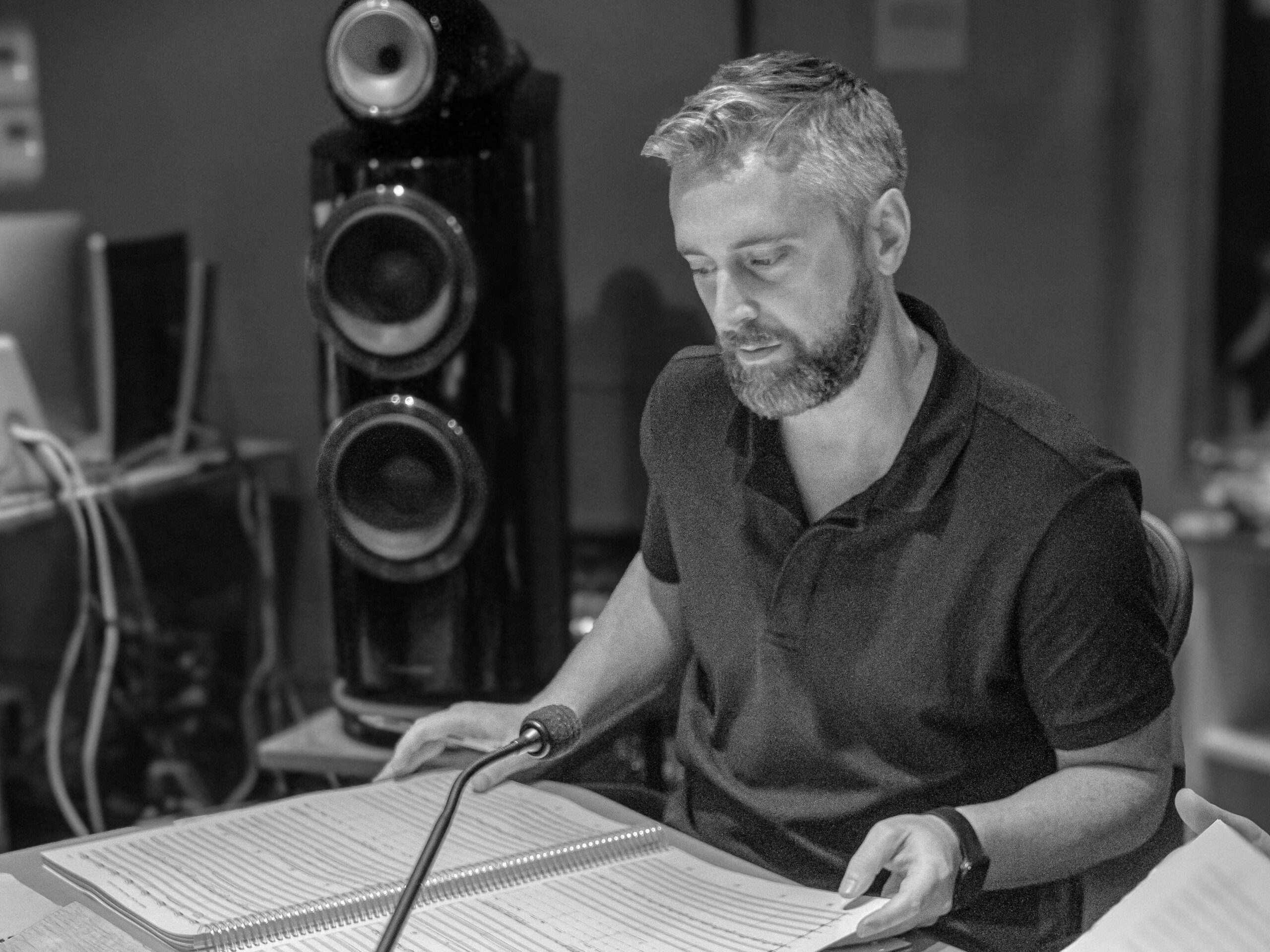
Artificial Intelligence and the Value of Creative Friction
Everist's ultimate answer goes beyond one game, one franchise, or one composition method.
Generative artificial intelligence is increasingly being used in music production, raising questions about authorship, copyrights and the economic future of professional composers.
Everist sees practical applications of AI beyond the creative process itself.
What worries him most is the common assumption that any process must be optimized until all obstacles disappear.
Generative artificial intelligence is becoming increasingly prominent in music production and raises questions about authorship, educational materials and the future of professional composers.What is your personal opinion on AI-generated music and does AI currently play any role in your creative process, be it research, experimentation or inspiration?
I'm not particularly worried about composers or musicians doing interesting work being replaced by artificial intelligence.
Music created by AI cannot actually be copyrighted, and rightly so.
However, it is difficult not to recognize the potential impact of AI on other, non-creative aspects of our work.
I understand how some AI tools can be useful for tasks such as task and project management, budget allocation and tracking, tooltip table reporting, stemming, and file management.
I think I also fundamentally disagree with this era of “maximizing” everything.
Not everything needs to be optimized to such an extent that everything works flawlessly.
Being human does not mean striving for maximization. It means to be happy.
I became a composer because I love my work.
Pleasure from doing work
This idea organically connects everything that Everist describes throughout the interview.
The music for the game Monopoly Star Wars: Heroes VS Villains is technically complex.It is created from sampled orchestral performances, interchangeable tracks and paired compositions that can change with each turn.
However, Everist never talks about this complexity as an exercise in optimization for optimization's sake.
The system exists to preserve movement, the element of surprise and play.
In a complete list of all Star Wars video games ever released the game Monopoly Star Wars: Heroes VS Villains occupies one of the strangest places: this a family board game with a much more ambitious interactive score than its title might suggest.
Perhaps it was this unexpected environment that gave Everist the opportunity to experiment.
Unable to arrange familiar themes or rely on a live orchestra, he found another way into the galaxy: trusting his own musical voice, accepting limitations and remembering to enjoy working with an orchestra.
In a project built on rules, plot twists and confrontations, the music ultimately succeeds because it never forgets the very human side of creating art:
Pleasure from doing work.