

Star Wars: A Yoda Stories (1997): A miniature tabletop adventure that made the galaxy feel like a lunch break

Some Star Wars games try to recreate the Battle of Hoth.
Others want to simulate the tension of commanding an Imperial fleet, surviving a lightsaber duel, or deciding whether your Jedi should remain noble or start throwing Force lightning at anyone who even slightly annoys them.
Star Wars: Yoda Stories wanted to exist quietly in a small Windows window, allowing you to avoid doing real work.
Released for Windows in 1997, Yoda Stories was the second and final game in the Desktop Adventuresseries from LucasArts, following Indiana Jones and His Desktop Adventures. Instead of one large campaign, it offered compact missions designed to be completed in short sessions, usually around an hour. A Game Boy Color version was released in 1999, although this adaptation made some significant compromises.
It sounds modest, because it was so. That was the whole point.
Yoda Stories, part of our complete archive of every Star Wars game ever released, deserves more attention than just a fun little Windows game where Luke had a huge head.It rightfully takes its place in our archive of Star Wars games 1990-1999 because it represents a completely different side of LucasArts in one of the most creative studio periods.
The same decade that gave us X-Wing, TIE Fighter, Dark Forces, Jedi Knight and glorious cinematic exuberanceRebel Assault II LucasArts also decided that Star Wars needed an answer to solitaire.
Somehow this answer boiled down to the fact that Yoda had repeatedly sent Luke across the galaxy in search of random household items.
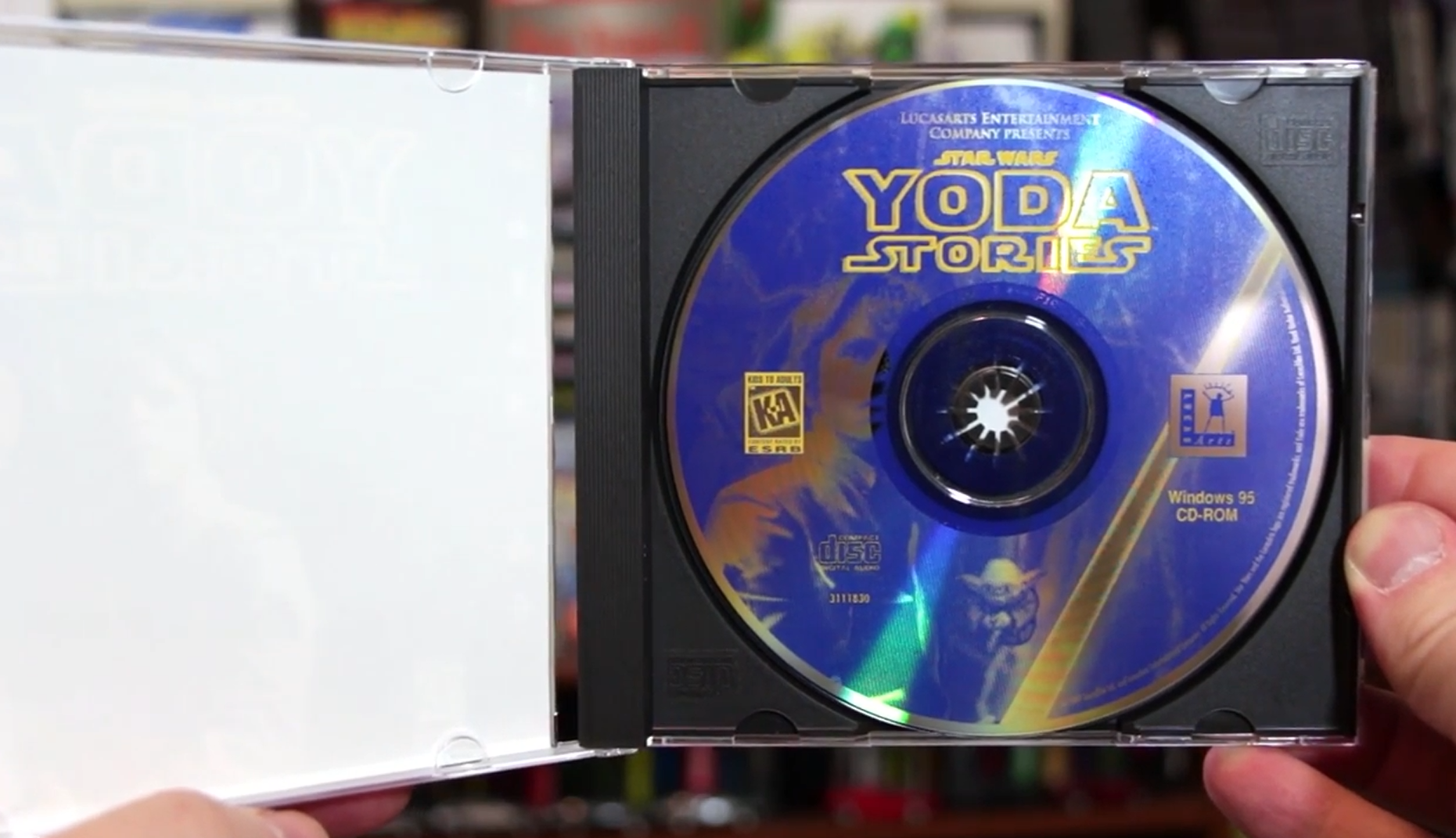
Star Wars in Office Desktop Design
The phrase “Adventures on the desktop”was not just a marketing ploy.
Yoda Stories was designed to run in windowed mode alongside the usual set of programs found on Windows computers. It didn't require you to take an evening off, study a manual the size of a small moon, or convince your family that the phone line should stay busy because you were using the Internet.
You could open it, play around a bit, save, close the window, and go back to that spreadsheet you pretended to understand.
LucasArts described Desktop Adventures as reusable action puzzle games designed for short play sessions.Each new session gave Luke a new task, a new world and a chain of small tasks to solve.
This made Yoda Stories feel extraordinarily casual, long before “casual games” became a huge, well-defined segment of the industry.
It was later described by designerHal Barwood as “tabletop entertainment” and a casual game before the term had seriously entered the gaming lexicon. He also recalled that Yoda Stories was developed relatively quickly, in about eight months, while improving on the puzzle structure created for the earlier Indiana Jones Desktop Adventure.
This context is extremely important because Yoda Stories was never intended to be a project that could compete with LucasArts' larger projects.
This is not Jedi Knight for people with short attention spans.
It was Minesweeper from Star Wars.
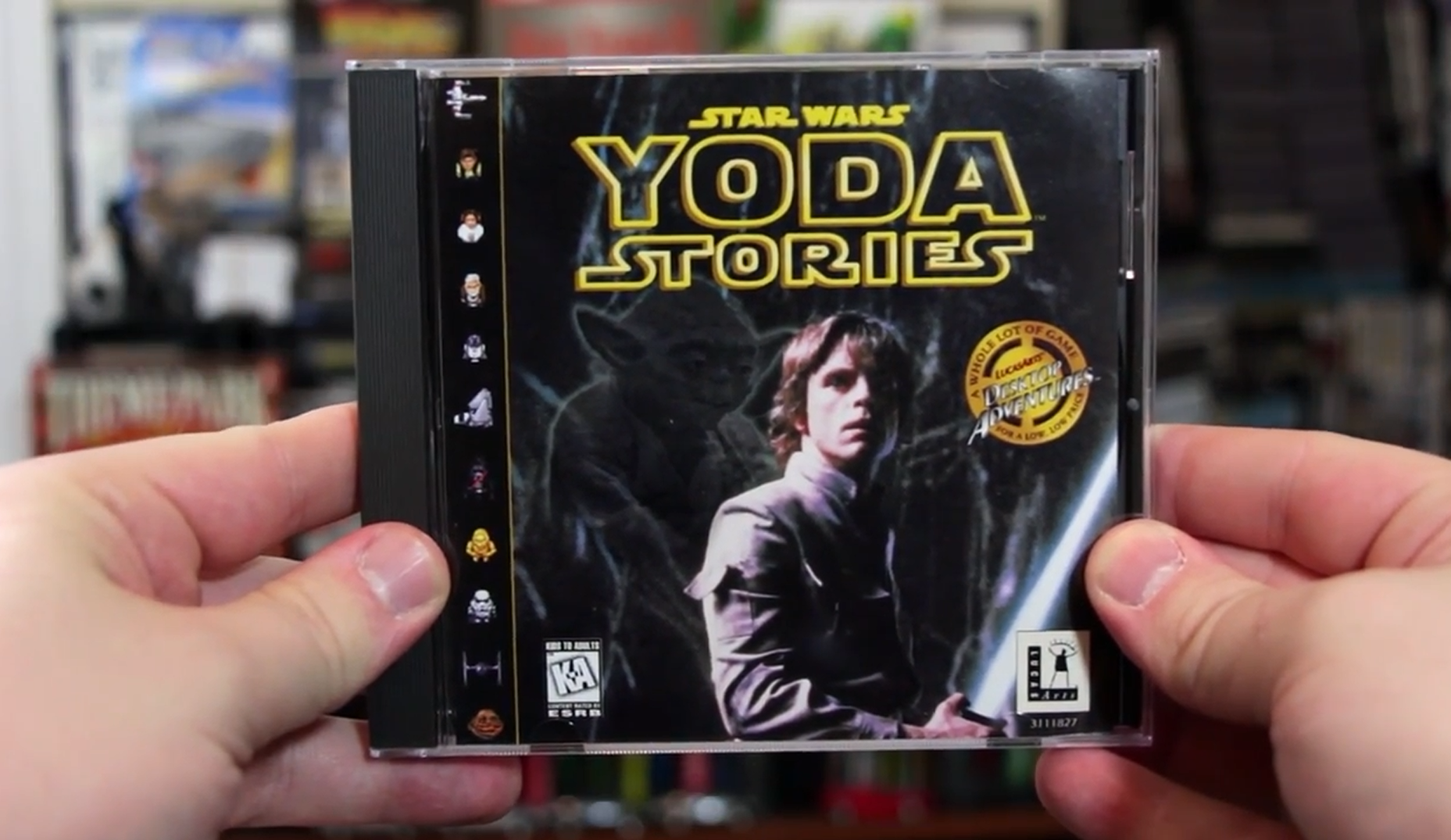
Yoda has one more little task for you.
Every adventure begins on Dagobah.
Luke Skywalker arrives in search of Yoda, who is usually hiding somewhere nearby, because apparently being a Jedi Master means having your apprentice search several swamp areas before explaining what's going on.
Having found Luke, Yoda assigns him a random task. Perhaps someone was kidnapped. The Empire may be building something unpleasant. It may be necessary to alert the rebels to the existence of the facility. An important artifact may have gone missing.Sometimes the galaxy is in mortal danger because someone wants a certain item that is currently in the possession of someone who wants a completely different item.
Yoda gives Luke one starting item, and from that moment a great intergalactic chain of assignments begins.
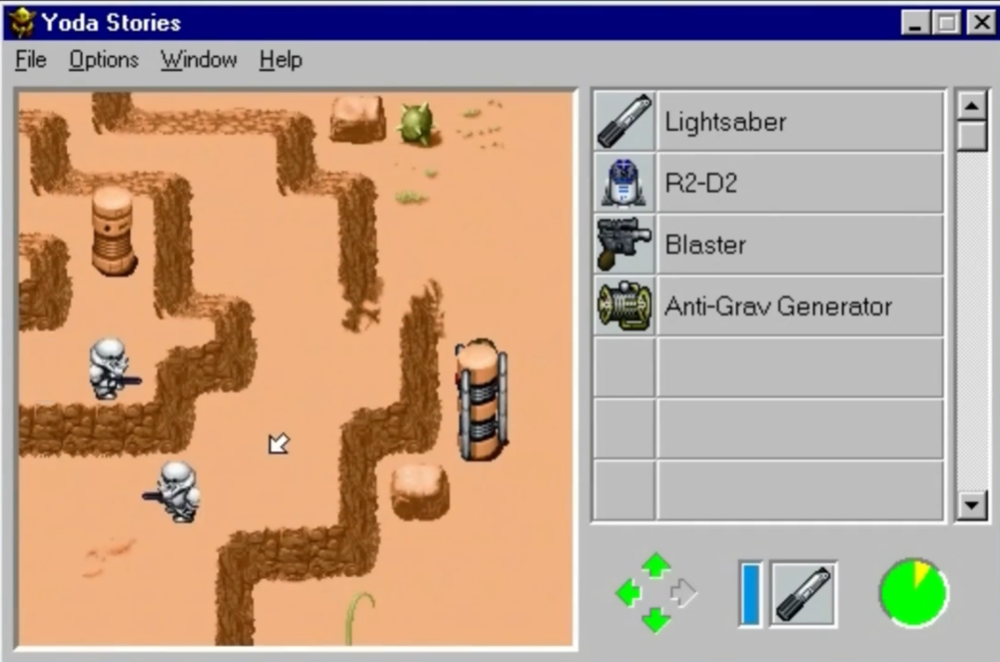
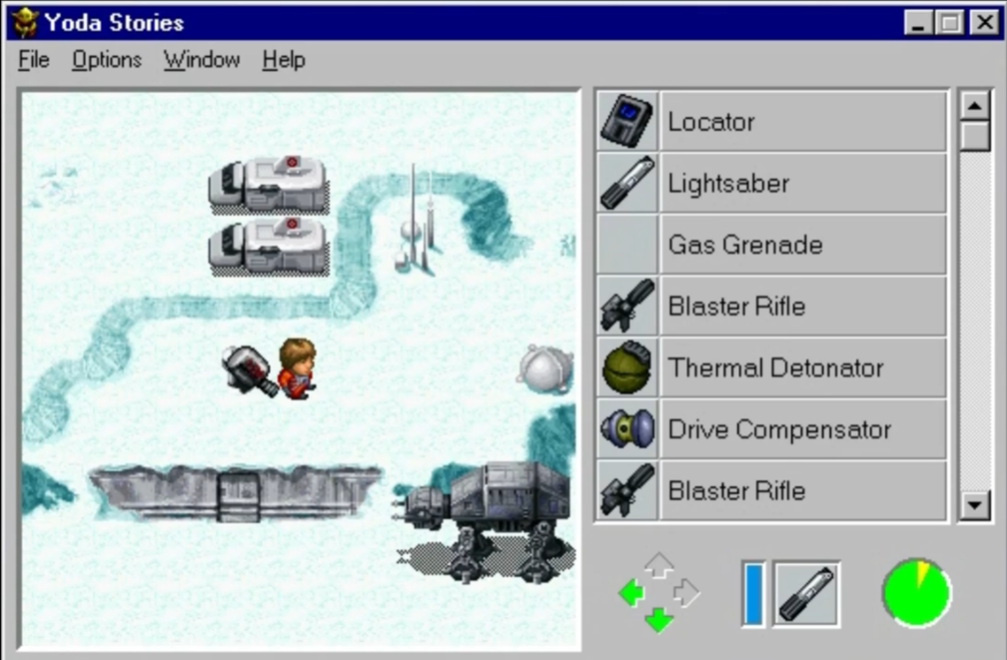
Luke ventures into a desert, snow, or forest world and explores a top-down grid filled with enemies, buildings, locked passages, movable blocks, friendly characters, and suspiciously handy items. Completing a mission usually means collecting one item, trading it for another, using that item to solve a puzzle, getting something else, and continuing the game until the final goal becomes available.
Essentially a rewrite of the Star Wars expanded universe, presented as a series of increasingly sophisticated services.
The rebel needs a hydraulic wrench.
The man with the hydraulic wrench needs mushrooms.
The mushrooms are behind the boulder.
The boulder can only be moved after Luke finds an item that enhances the Force.
This facility is guarded by six stormtroopers and what appears to have been ripped from a discarded Kenner playset.
Adventures await you.
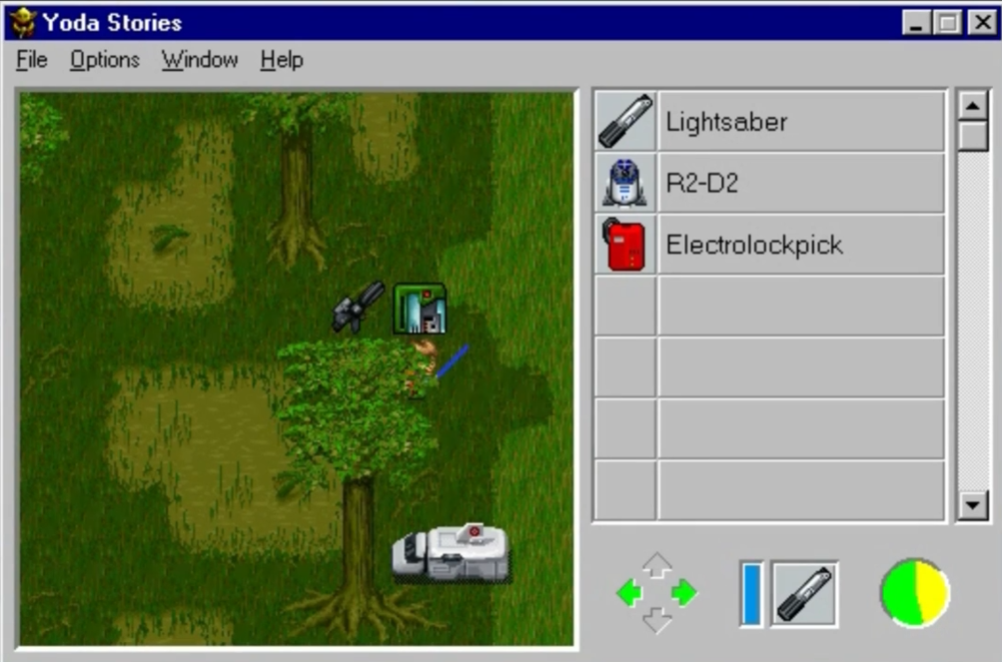
A galaxy created from tiles, keys and a little confusion.
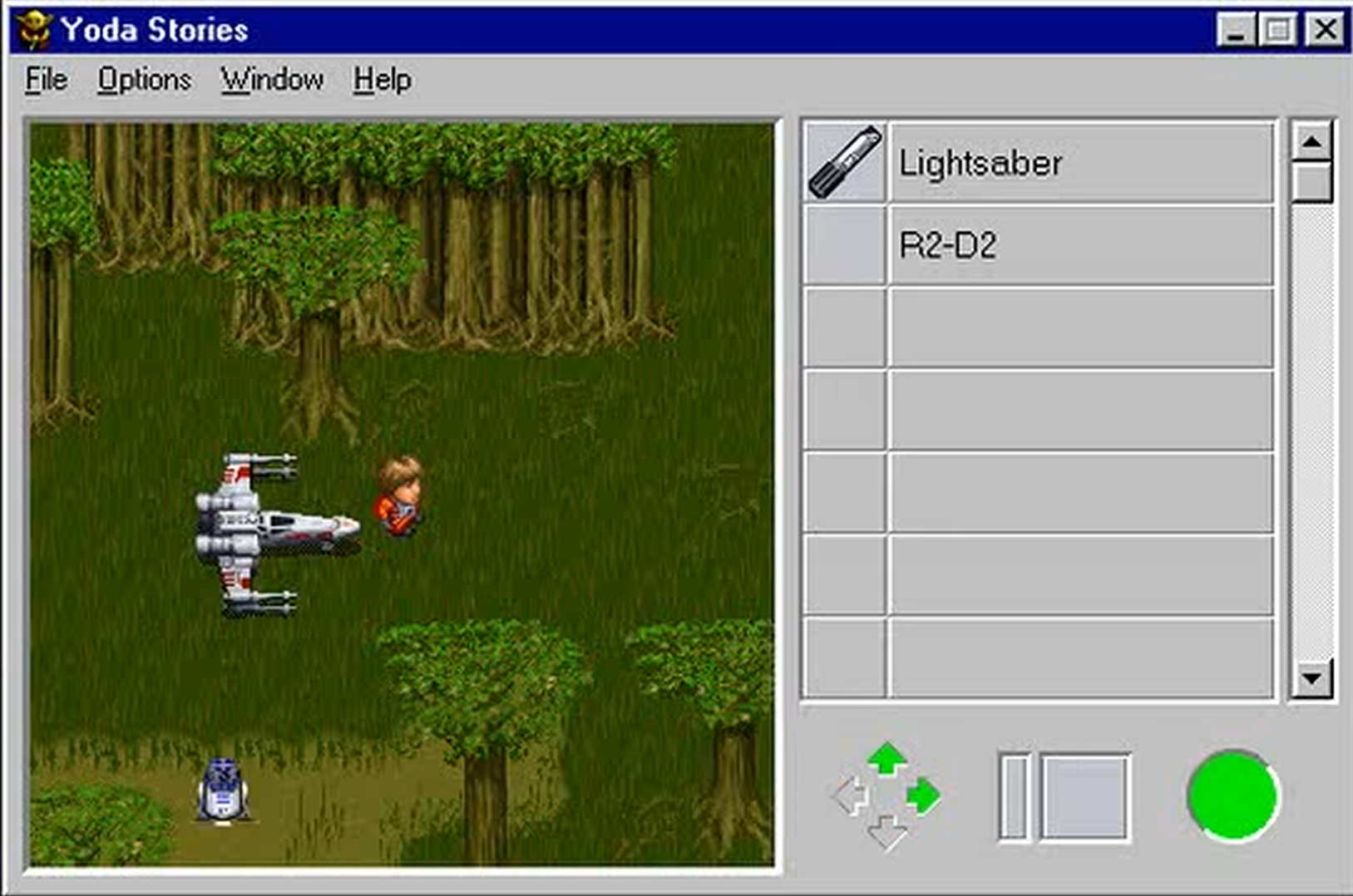
The basic presentation is simple.
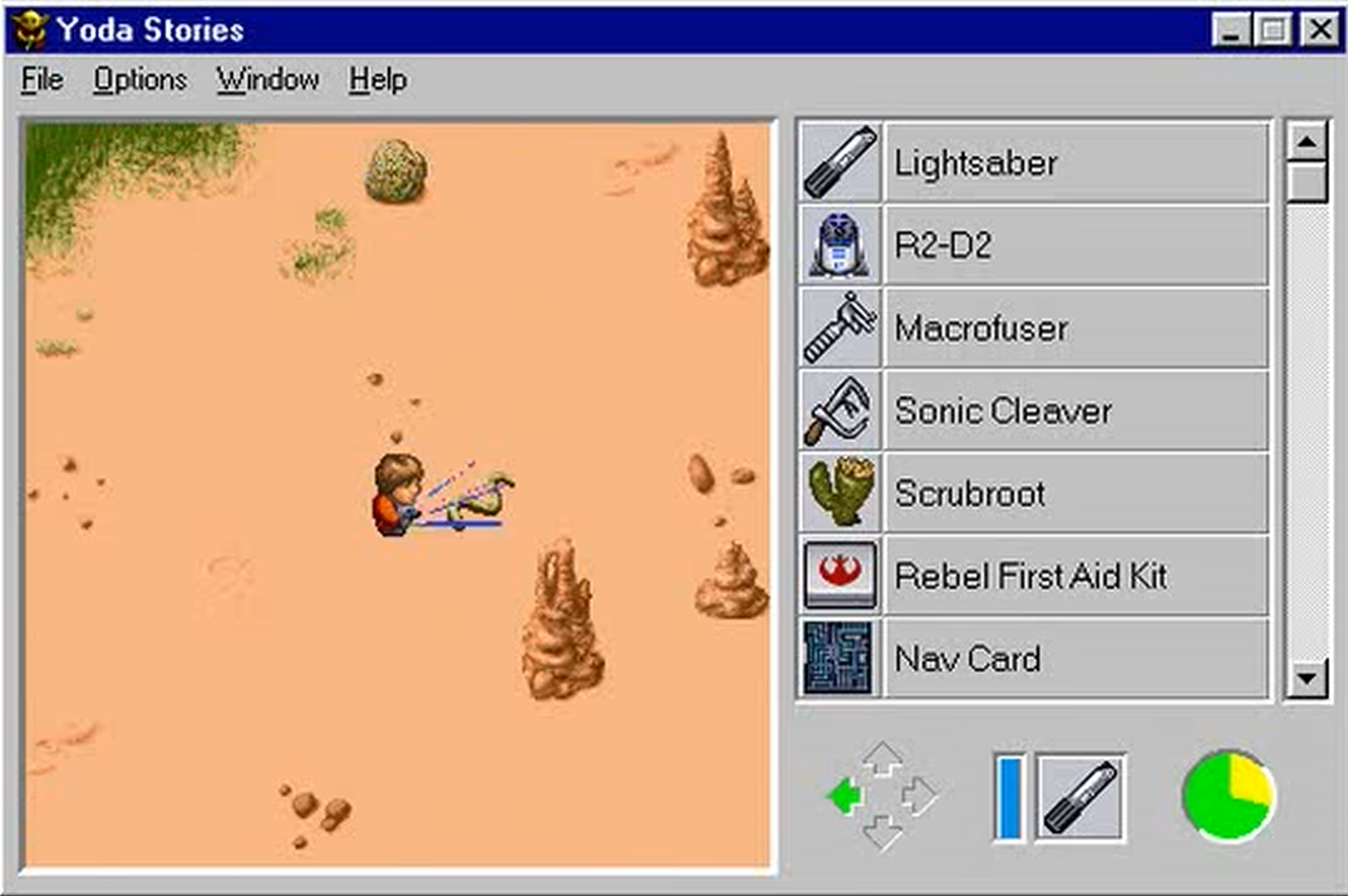
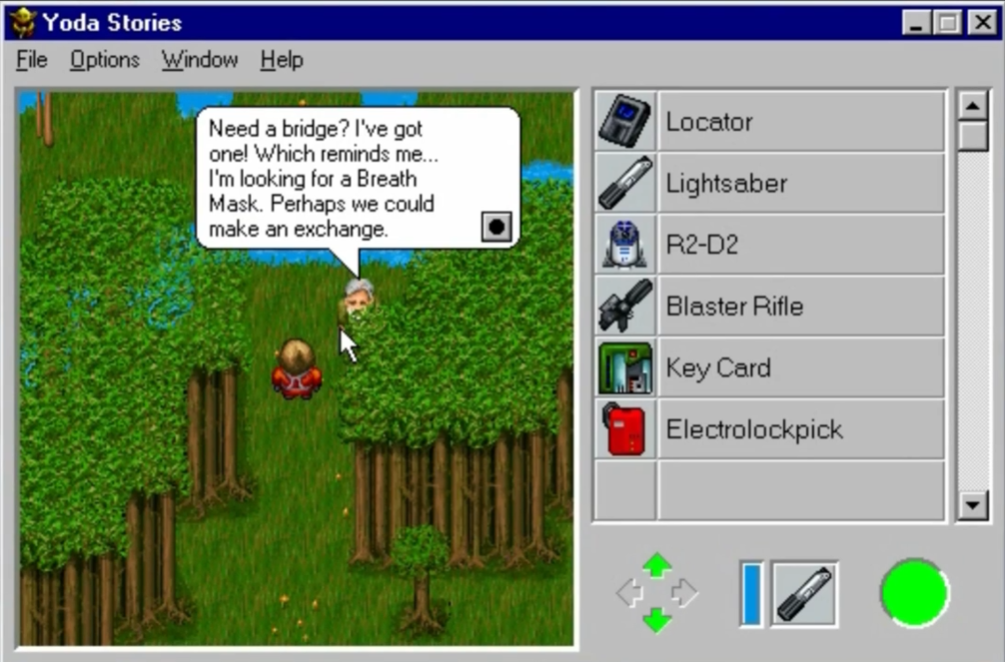
The hatch moves one cell at a time in compact locations with a top view. The mouse is used to move and interact, although keyboard controls are also available.Items are stored in the inventory on the side of the screen, and whatever Luke currently equips can be used against enemies, obstacles, or puzzle elements.
He starts the game with his lightsaber, but defeated enemies can leave behind blasters, imperial rifles, thermal detonators, rations and medical supplies. Some blocks can be pushed or pulled, barriers can be destroyed, and some objects can be manipulated using the Force.
There are also small improvements that make treasure hunting more convenient.
R2-D2 can be found on Dagobah and used to identify objects or get clues. The locator device displays the generated map and marks areas that remain unsolved. Teleporters reduce the time required to travel on foot once discovered, and medical droids can assist Luke at designated locations.
Players could choose between small, medium and large generated worlds, adjust the difficulty of the battle and save if necessary. The original CD-ROM took up just eight megabytes of hard drive space after installation, which now feels less like a technical specification and more like a message from an ancient civilization.
The tiny character sprites also gave the game a distinctive toy box look.
Luke, Yoda, stormtroopers, Jawas and various creatures look slightly compressed and enlarged in size, as if the entire Galactic Civil War was recreated using board toys on a particularly quiet Friday afternoon.
Visually the film does not impress, as is customary in 1997.
It's surprisingly charming, though.
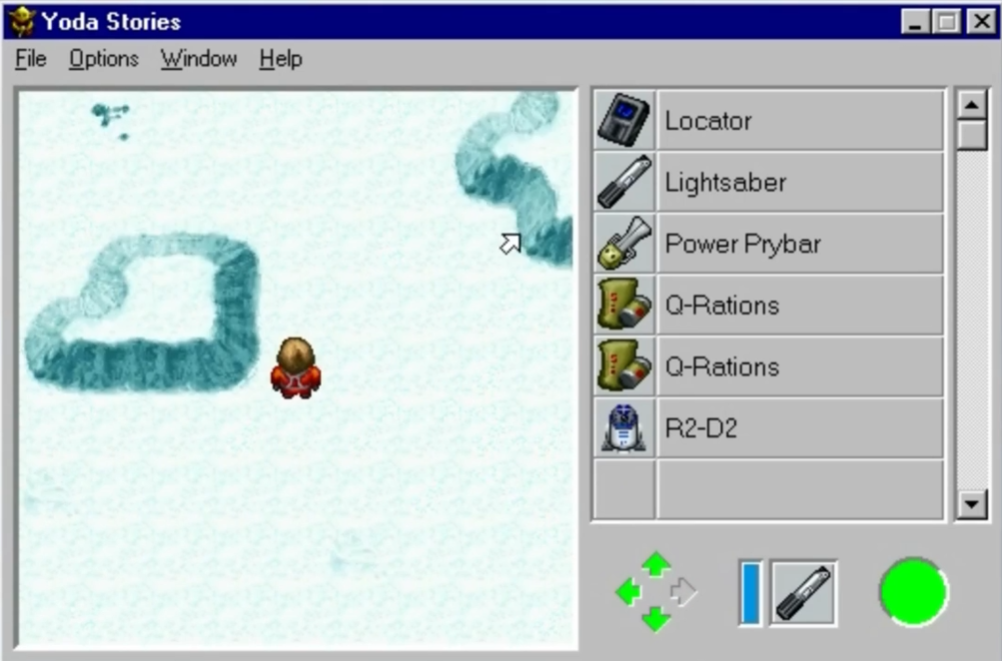
Random generation did not mean infinite variety.
Yoda Stories has been touted as having high replay value, but the random number generation needs a little refinement.
The game allowed you to rearrange cards, puzzles, locations and chains of objects, creating many possible combinations. However, it couldn't create truly new stories, characters, or mechanics from scratch. Beneath the shuffled diagrams lay a set of about 15 mission storylines, distributed across three main environmental themes.
Eventually, the repetition became impossible to ignore.
The same enemies have returned. The same cells appeared again. The same basic sequence of finding, trading and using items was repeated, but under slightly different circumstances. A later PC Gamer review argued that the promising structure was undermined by limited content and resources, causing the supposed endless variety to suddenly become commonplace.
However, random generation was not a common practice in licensed Star Wars games at the time.
Yoda Stories tried to create a game with high replay value without requiring a large campaign or competitive multiplayer. In modern terms, it resembles a small procedurally generated adventure game built on multiple playthroughs, only without upgrade trees, seasonal currency, or a battle pass that requires Luke to buy a premium suit from Dagobah.
Execution was limited.
This idea was not stupid.
Fights were the price you paid for the puzzles.
The weakest point in Yoda Stories is the combat.
Luke's movements are stiff, enemies often circle awkwardly around him, and lightsaber combat often feels like an impatient child trying to push two action figures together.Positioning matters, but does not always lead to satisfactory or predictable results.
GameSpot was particularly merciless about the Game Boy Color version, criticizing its controls, combat system, monotonous graphics, limited variety of enemies and sound. As a result, the publication gave the game 1.8 points out of 10 and called it one of the worst games in the Star Wars universe.
The original Windows game is easier to defend because the mouse interface is better suited to its puzzle-based structure.
However, even here no one confuses these battles with duels of Jedi Knights. Swinging Luke's lightsaber is less a graceful expression of Jedi training and more a practical way of scaring hostile creatures away from the next important key.
The real game is in the puzzles.
Combat is what happens when you go towards them.
The LucasArts game that critics didn't want
In general, the book "Tales of Yoda" was received negatively.
Reviewers criticized the game's simple graphics, clunky combat, repetitive elements, and lack of depth. At a time when computer games were getting bigger, more cinematic, and more three-dimensional, LucasArts released a tiny windowed game with bulky tiles and deliberately simplified mechanics.
It almost immediately seemed old.
Part of the problem was expectations.
It was a LucasArts Star Wars game released in 1997, the same year asJedi Knight: Dark Forces IIandX-Wing vs. TIE Fighters. Players saw how ambitious Star Wars games could be. Many people didn't see Yoda Stories as disposable desktop entertainment.They viewed it as the next official Star Wars game and rated it accordingly.
Hal Barwood remained proud of the project and argued that its simple purpose was misunderstood. He later said that the team had improved the engine and puzzle structure over its predecessor Indiana Jones, and recalled that Yoda Stories sold so well that he wished LucasArts had made more games in the series.
Both sides are right.
Tales of Yoda is a monotonous, clunky, and visually limited project.
Plus, it does pretty much what it was designed to do.
The Game Boy Color port made things more complicated.
In 1999, the game Yoda Stories was released on the Game Boy Color thanks to the developer Torus Games, and the publisher was THQ.
On paper this step seemed logical. A game designed for short, simple gaming sessions, it was ideal for a portable console.
The problem was that the flexibility of the Windows version was not preserved intact.
The Game Boy Color version replaced the procedurally generated adventures with 15 preset levels. Limited screen real estate, motion controls, and simplified graphics also made navigation and interaction with objects more awkward.
As a result, the overall concept of The Tales of Yoda was preserved, but at the same time it lost much of the raison d'être of the original.
The game for Windows was attractive because it could sit quietly on the desktop and create new small adventures as needed.The portable version retooled this concept into a more traditional sequence of fixed stages, complete with movement and combat elements that critics said were downright frustrating.
This is an important point to keep in mind whenever Yoda Stories lands on lists of terrible Star Wars games.
The original PC version was an imperfect but purposeful experiment.
It was with the version for Game Boy Color that everything began to slide into the abyss.
The set also included a piece of Star Wars special edition history.
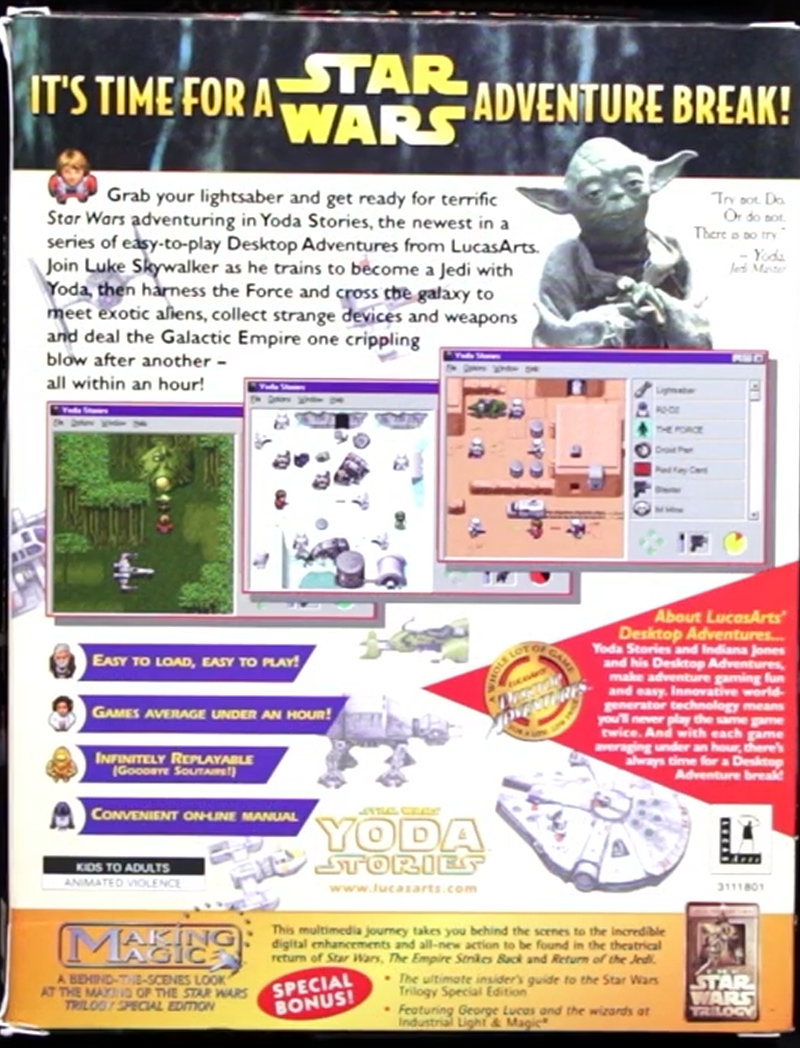
The original Windows installation disc included Star Wars: Making Magic, an interactive documentary about the making of the Star Wars special editions.
This placed Tales of Yoda directly into the context of the strange rush of 1997, when the original trilogy was returning to theaters with updated visuals and Lucasfilm was enthusiastically promoting the possibilities of digital filmmaking.
The game itself may have looked modest, but the disc came out during the massive Star Wars revival. New toys were everywhere. Special editions filled cinemas. The Expanded Universe grew, and LucasArts released Star Wars games in completely different genres.
The Stories of Yoda relates to this moment.
This is one of the smaller products from the period when Star Wars suddenly seemed like something big again.
A casual Star Wars game before mobile gaming took over the world.
Looking back, Tales of Yoda seems less absurd than it did in 1997.
It comes as no surprise today that a major franchise might release a small game designed for short daily gaming sessions. Star Wars has appeared in puzzle games, collectible games, mobile RPGs, strategy games, pinball games, and on so many free-to-play gaming platforms that even Watteau would question its economic viability.
Short, repeatable adventures are now completely the norm.
Yoda stories simply appeared before the industry had a comfortable definition for them.
It didn't have daily quests, cloud saves, or a store. It did not require constant Internet access to work. Yoda did not offer Luke 800 crystals in exchange for completing seven tasks on the snow planet.
You have opened the game.
Yoda gave you a strange task.
You wandered around until you found the right combination of items.
Then you went back to work.
There's something refreshingly sincere about it.
The game has survived thanks to nostalgia and the dedication of its fans.
Yoda Stories has never received the kind of commercial remaster that several larger LucasArts projects have received.
Running the original Windows version on modern systems can be problematic, although game preservation communities support the game's availability.Fan projects such asYoda Stories NGhave even attempted to recreate the Desktop Adventures engine by reading data from the original game files.
The game also continues to feature in throwback reviews, videos, and nostalgic discussions among players who remember discovering it on family computers.
We even briefly touched on this topic in an earlier retrospective article on 2014 Yoda, long before this larger archival project began.
This longevity is not based on the fact that Yoda Stories is secretly considered one of LucasArts' best games.
It was preserved because there is nothing else like it.
Why Yoda stories should be archived
The Yoda Stories are easy to ridicule.
The drawings are tiny. The music repeats. The combat is clunky. Luke spends most of his Jedi training carrying random objects between people who refuse to solve their problems on their own.
But this game has something that most licensed games never manage to achieve.
This makes the Star Wars galaxy feel small, casual, and surprisingly homey.
Not every Rebel mission involves the Death Star. Sometimes Luke will land on a quiet planet, talk to a few locals, deal with a few stormtroopers, and spend 20 minutes searching for the item behind the rock.
It's this scale that gives The Tales of Yoda its charm.
It feels like a collection of untold side quests from the Expanded Universe.None of them are of great importance, but any of them could have happened on some undocumented day between larger adventures.
LucasArts was willing to look at Star Wars as more than just one type of game. It could release a serious flight simulator, a first-person shooter, an interactive movie, and a small board puzzle game without insisting that each project compete for the same audience.
The Yoda Stories may be one of the most striking examples of such freedom.
It didn't aim to be the future of Star Wars gaming.
This was an attempt to make your lunch break a little less boring.
Mission accomplished, more or less.
Frequently asked questions
What is Star Wars: Yoda Stories?
Star Wars: Yoda Stories is a small action-puzzle adventure game released by LucasArts for Windows in 1997. It generates short missions featuring Luke Skywalker and was designed to be played in short sessions on a desktop computer.
Was Yoda Stories randomly generated?
In this Windows game, maps, puzzles, objectives, and item chains are rearranged to create different adventures. However, it uses a limited set of mission plots, locations and resources, rather than generating completely new stories.
Who developed Yoda Stories?
The original version for Windows was developed by LucasArts. Hal Barwood served as project manager and co-developed the game with Mark Crowley.Torus Games later developed a version for the Game Boy Color.
When was the Game Boy Color version released?
The Game Boy Color port was released in 1999, two years after the original Windows version.
Is the Game Boy Color version identical to the PC version?
No. The portable version uses 15 preset levels instead of the randomly generated adventures of the Windows version, and is generally considered a weaker version.
Are Stories of Yoda canon?
Stories of Yoda refers to earlier Star Wars Expanded Universe material that is now generally classified as "Legends". Their individual adventures have always been loose, playful side stories rather than important parts of the main chronology.
Is Yoda Stories worth playing today?
The original Windows game deserves attention as an unusual piece of LucasArts history. Its combat system and repetitiveness have aged poorly, but the short play sessions, generated missions and toy-like graphics still give it a unique charm.