

Star Wars: Masters of Teräs Käsi (1997): The fighting game everyone remembers for the wrong reasons

In the movie "Star Wars: Masters of Teras Kasi"there is a moment where a Gamorrean guard is able to strike Darth Vader, knocking him unconscious.
Don't distract him. Do not knock it into a conveniently located reactor shaft. Not surviving long enough for someone more qualified to arrive. Just beat him in a fight.
That tells you pretty much everything you need to know about LucasArts' 1997 attempt to turn Star Wars into a fighting game for the PlayStation. Almost.
Because while Masters of Teräs Käsi has been the butt of jokes for decades, it's not just a bad game with a famous license. It's an exciting collision of Star Wars, 1990s fighting game fever, unfamiliar hardware, Expanded Universe enthusiasm, and the dangerous belief that any franchise could be the nextTekkenif you gave everyone enough special moves.
She didn't become the next Tekken. However, it did allow us to see Boba Fett firing missiles at Luke Skywalker while the princess Leia was waiting nearby with her staff.
History deserves to be properly remembered.
As part of our complete archive of all Star Wars games ever released, Masters of Teräs Käsi rightfully takes its place among Star Wars games 1990-1999. It came out during one of LucasArts' busiest and most creative periods, the same year as Jedi Knight: Dark Forces II, X-Wing vs.TIE Fighterand the wonderful, albeit small-scale, Yoda Stories game.
In 1997, LucasArts experimented with almost everything.
This is what happened when it tried to kick.
Star Wars needed a fighting game because everything needed a fighting game.
This idea was not ridiculous.
By the mid-1990s, fighting games were everywhere. Street Fighter II helped turn the genre into a global obsession. Mortal Kombat introduced digital violence and political panic. Virtua Fighter brought the genre to 3D, and Tekken became one of the defining series of the original PlayStation.
Publishers wanted fighting games. Players wanted fighting games. Licensed characters were already starting to look like obvious candidates for organized digital violence.
Star Wars had lightsabers, bounty hunters, martial artists, monsters, blasters, staves, axes, and a villain whose parenting style was entirely based on aggressive hand gestures.
On paper everything looked perfect.
LucasArts announced Masters of Teräs Käsi during the heyday of fighting games during the PlayStation era. It was the company's first fighting game and the first PlayStation project developed in-house. This meant that the team explored the capabilities of Sony hardware while simultaneously trying to create a genre that LucasArts had never worked in before.Lead artist and designer Craig Randels later described the development process as learning to program, animate, and create graphics for the console while the game itself was already in development.
There is nothing alarming about this.
Simply create a competitive 3D fighting game, master unfamiliar console hardware, master one of the biggest entertainment licenses on Earth, and make sure Chewbacca's arms don't fit through Boba Fett's chest.
After finishing work, take the weekend.
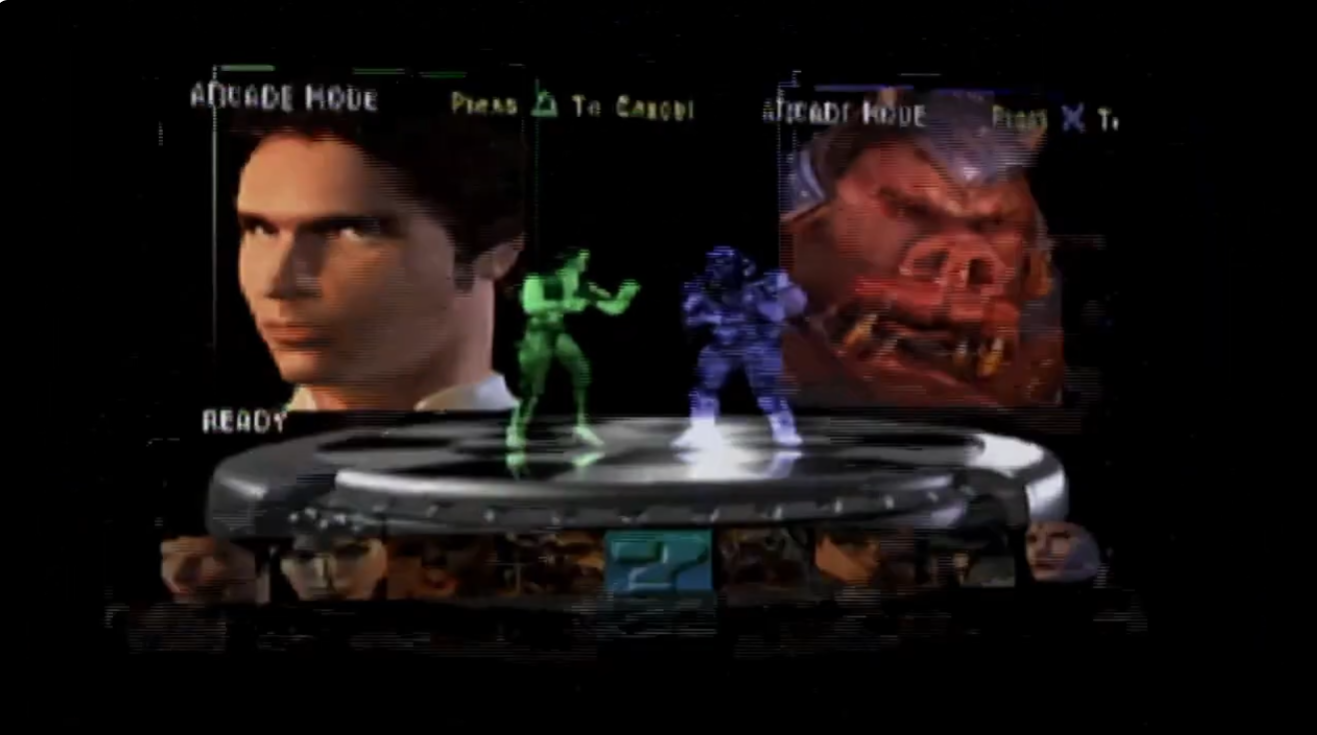
The Emperor's most elaborate revenge plan to date.
The game required a reason for famous Star Wars characters to meet in square arenas and punch each other repeatedly.
LucasArts gave her one chance.
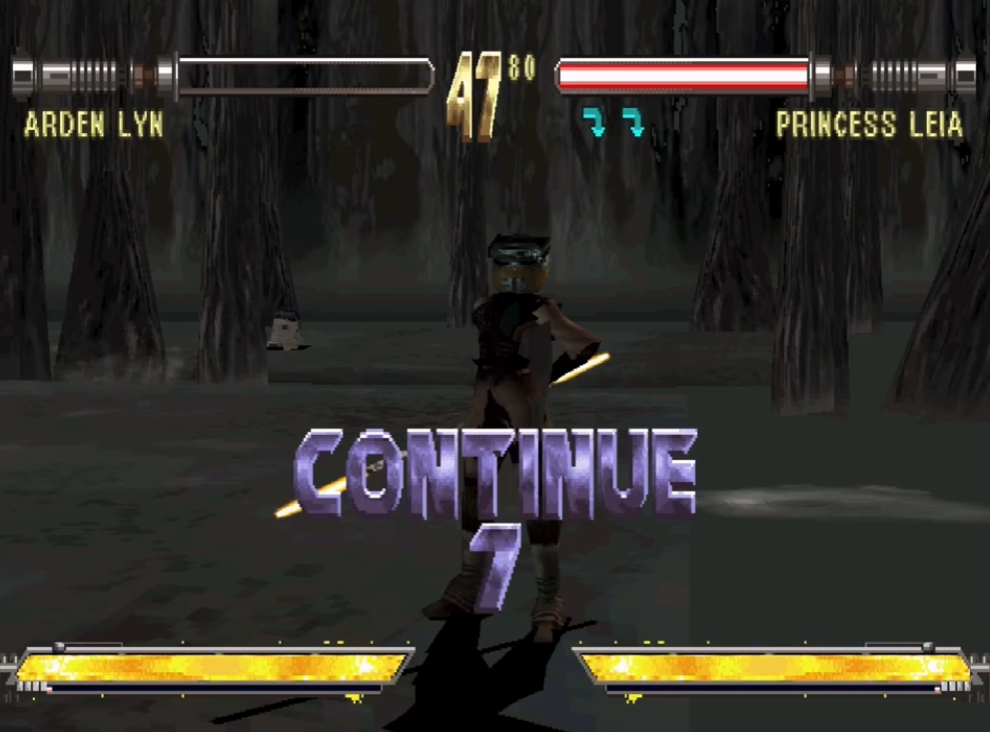
After the destruction of the first Death Star, Emperor Palpatine recruitsArden Lyn, an assassin and master of the ancient martial art known as Teras Kasey. Her mission is to eliminate important members of the Rebel Alliance, which apparently requires challenging them individually rather than simply attacking their base with several thousand stormtroopers.
The Rebels become aware of the threat and respond by directly confronting Arden and other Imperial warriors.
That's pretty meager, but fighting game stories have stood up to more modest tests. Somewhere there is always a global martial arts tournament hosted by a billionaire with suspicious cheekbones.
The plot also gives the game an original villain.Arden Lyn was created specifically for Masters of Teräs Käsi, possessing an ancient mechanical arm, a personal connection to the combat discipline, and just the right amount of Expanded Universe backstory needed to justify her presence opposite Luke Skywalker on the health meter screen.
It remains one of the best ideas in the game.
Instead of relying entirely on characters from the films, LucasArts tried to create a character that would fit seamlessly into a Star Wars fighting game. Arden looked original, fought differently, and gave the project a little more personality than just "Luke Skywalker vs. Everyone."
The fact that the title was more memorable than the character itself is not entirely her fault.
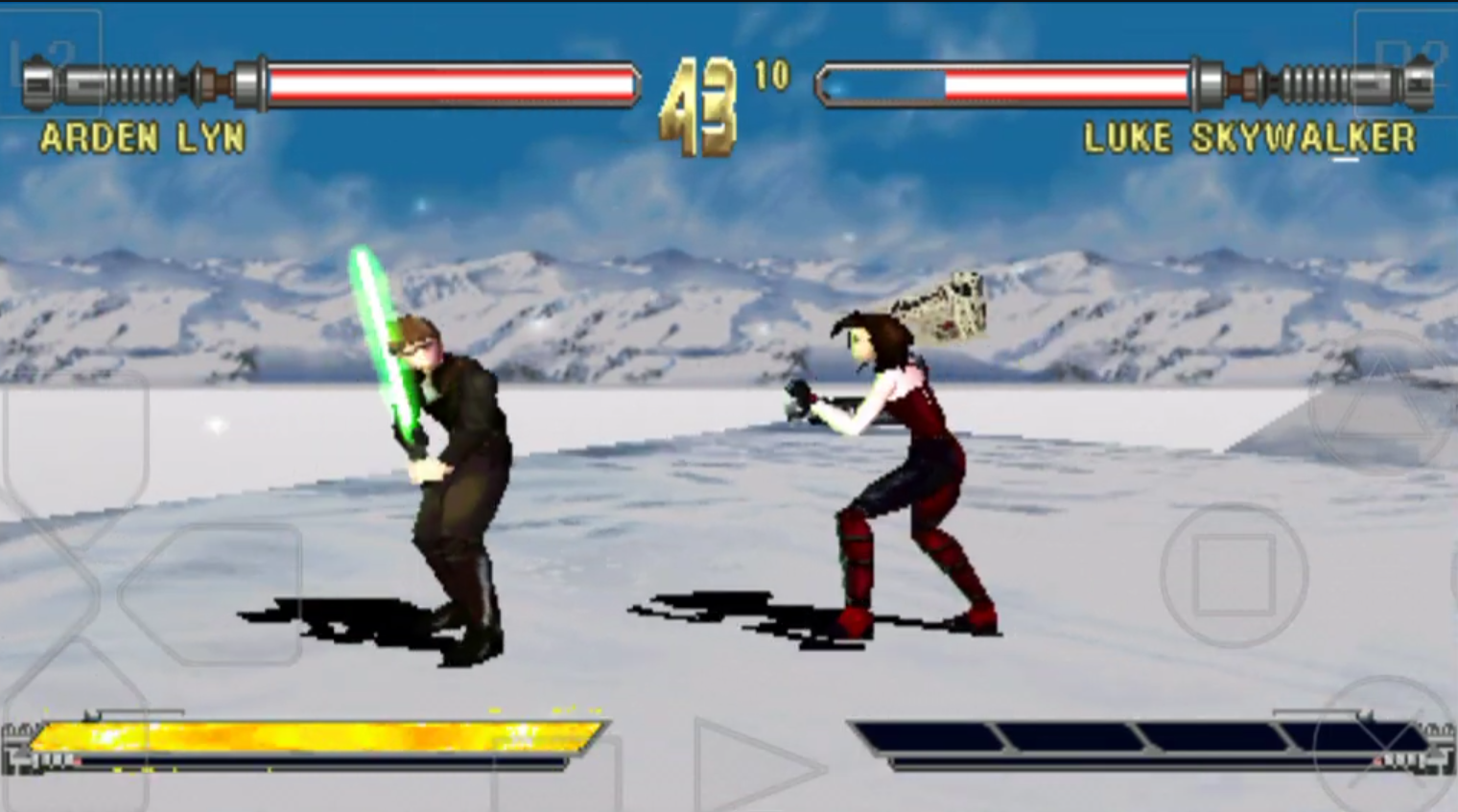
What does Teras Käsi really mean?
The game Teräs Käsi was not invented specifically for her.
This martial art appeared in the earlier Star Wars expanded universe before LucasArts created an entire fighting game based on it. The name comes from Finnish words that are usually translated separately as "steel" and "arm", although the exact wording has long drawn criticism from Finnish speakers who understandably object to their language being assembled like individual LEGO pieces.
According to reports, the developers became acquainted with this combat discipline thanks to materials related to the larger project Shadows of the Empire.Author Steve Perry came up with the term when he was looking for something that sounded rugged and ancient.
This certainly sounds harsh.
Masters of the Steel would have been less mysterious and much more like a typical straight-to-video martial arts movie starring an actor who once starred behind Jean-Claude Van Damme.
The important thing is that the game significantly expanded the audience covered by this term. For many players,Masters of Teräs Käsiwas their first introduction to the idea that the Star Wars galaxy has formal combat traditions that go beyond learning to wield a lightsaber and chopping off Wookiee hands.
The game failed to turn Teräs Käsi into a major gaming franchise.
This allowed us to make this name unforgettable.
List of characters taken from movies, comics, novels, and someone's toy shelf.
There were several obvious options in the starting line-up.
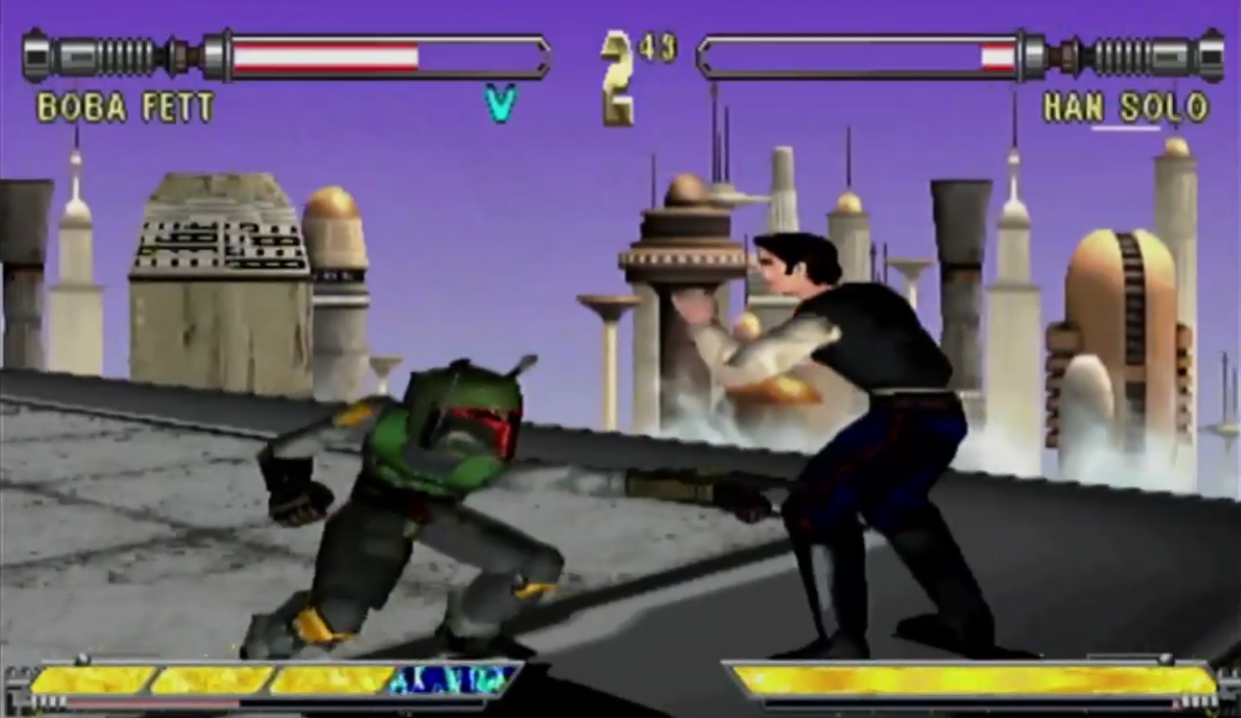
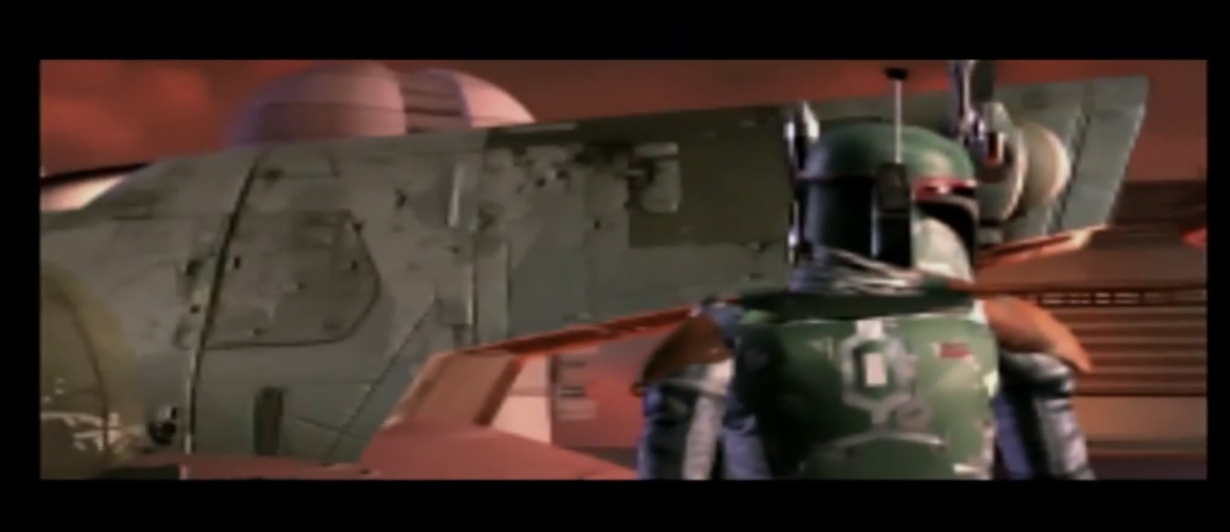
Luke Skywalker brought a lightsaber. Han Solo brought a blaster and the confidence of a man who apparently agreed to fight Darth Vader with his fists. Princess Leia used a staff. Chewbacca carried a huge axe. Boba Fett arrived with so many long-range weapons that the concept of fair competition became largely theoretical.
Then the team composition became more interesting.
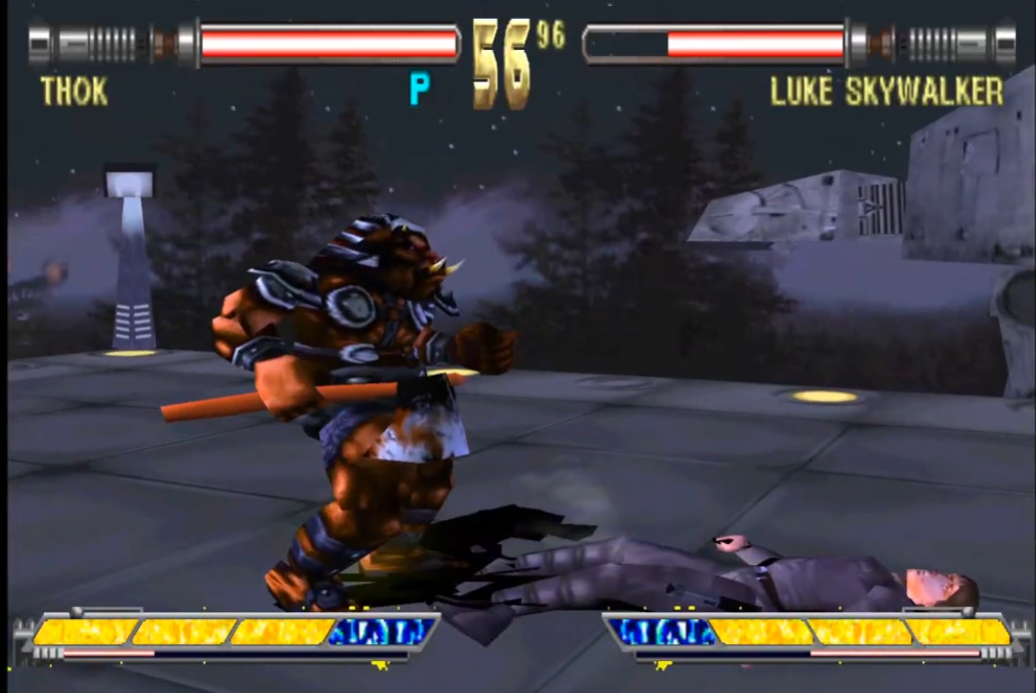
Hoar was a Tusken raider created specifically for the game. Thokwas a Gamorrean guard with a large ax and the physical size of a refrigerator who developed anger management issues. Arden Lyn represented the new martial arts mythology in this game.
Unlockable fighters have expanded the character lineup, adding Darth Vader, a stormtrooper, Jodo Caste, Mara Jade, and an alternate version of Leia based on her appearance in Jabba's palace.The character selection was borrowed liberally from the films and the old Expanded Universe, making it feel like the contents of a box of Star Wars action figures had been spilled onto the carpet.
It is this combination that remains one of its most attractive features.
The inclusion of Mara Jade in the game had special meaning for Expanded Universe readers. In 1997, she was known primarily for her novels and related material. Her appearance alongside Luke, Vader, Han and Leia made it feel like LucasArts was drawing inspiration from the entire Star Wars universe, not just the original trilogy.
Jodo Cast was even lesser known, playing Boba Fett's doppelgänger, and his presence feels like someone on the development team successfully won an argument that started with "No, trust me, the biggest fans know him."
They did just that.
The team composition was not particularly balanced, but had its own unique character.
This already puts it ahead of many licensed games, where each character feels like the same mannequin put on a different texture.
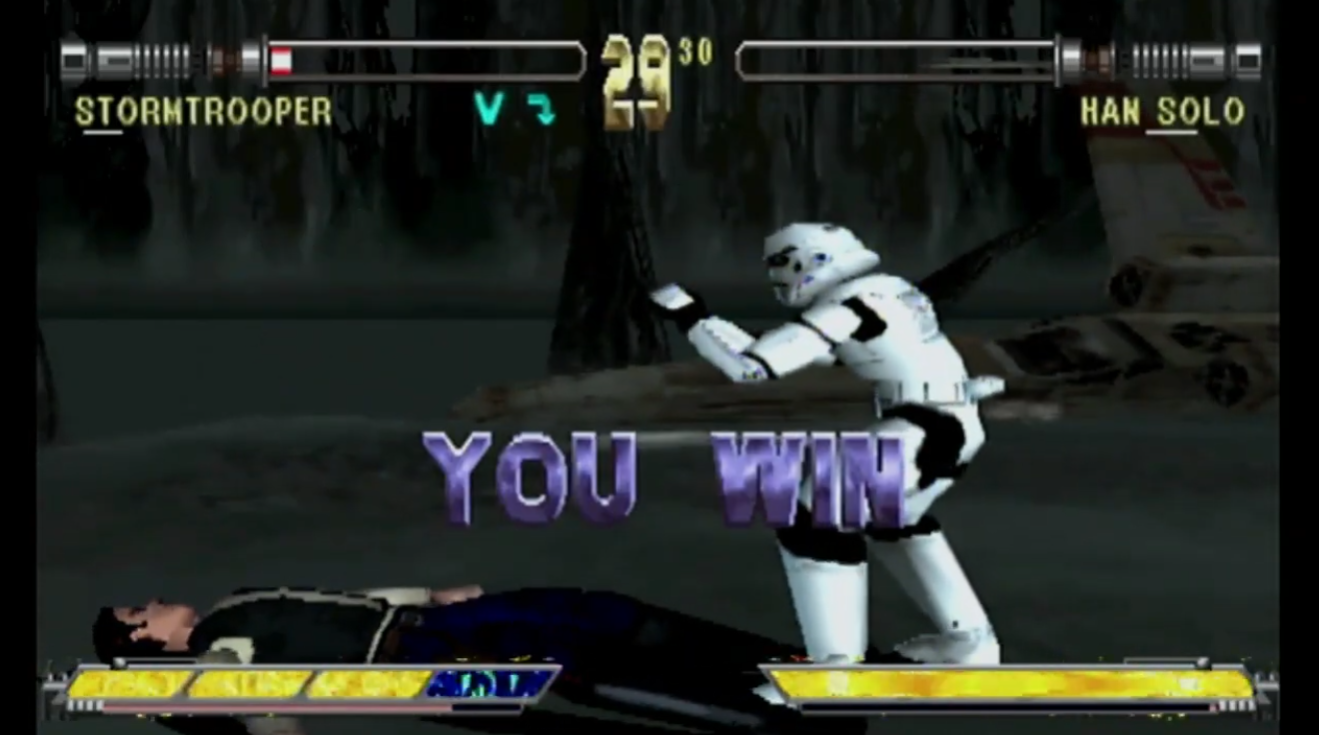
Weapons, fists and a strength meter that broke everything.
Most fighters could switch between hand-to-hand and unarmed combat during a fight.
It was a truly ambitious concept. Characters actually had two fighting styles, with different button layouts depending on whether they had a weapon drawn. In melee mode, attacks were tied to individual limbs. In weapon combat mode, the controls changed to accommodate different punches and kicks.
It sounded deeper than it felt to the touch.
The transitions between styles added complexity, but also contributed to a control scheme that never felt smooth.Instead of creating the satisfying rhythm of a great fighting game, matches often felt like two expensive character models arguing over whose animation should end first.
The game also made use of a power meter, commonly referred to as the Force meter, even for characters whose connection to the Force was largely through being shot at by those who understood it better.
As the gauge filled up, fighters could use increasingly powerful special attacks. Luke could throw his lightsaber. Boba Fett could call down a hail of missiles. Other characters used attacks that ranged from useful to downright unfair.
GameSpot's original review cited these moves as a major balance issue. Throwing Luke's lightsaber could take away a huge portion of the enemy's health, and Fett's missile attack turned part of the arena into a kind of place where the Empire's safety regulations were violated.
The result was a fighting game where learning distance, timing, and combos could be less rewarding than finding a move your sibling hates and repeating it until he or she leaves the room.
In other words, the game still provided an authentic 1990s multiplayer experience.
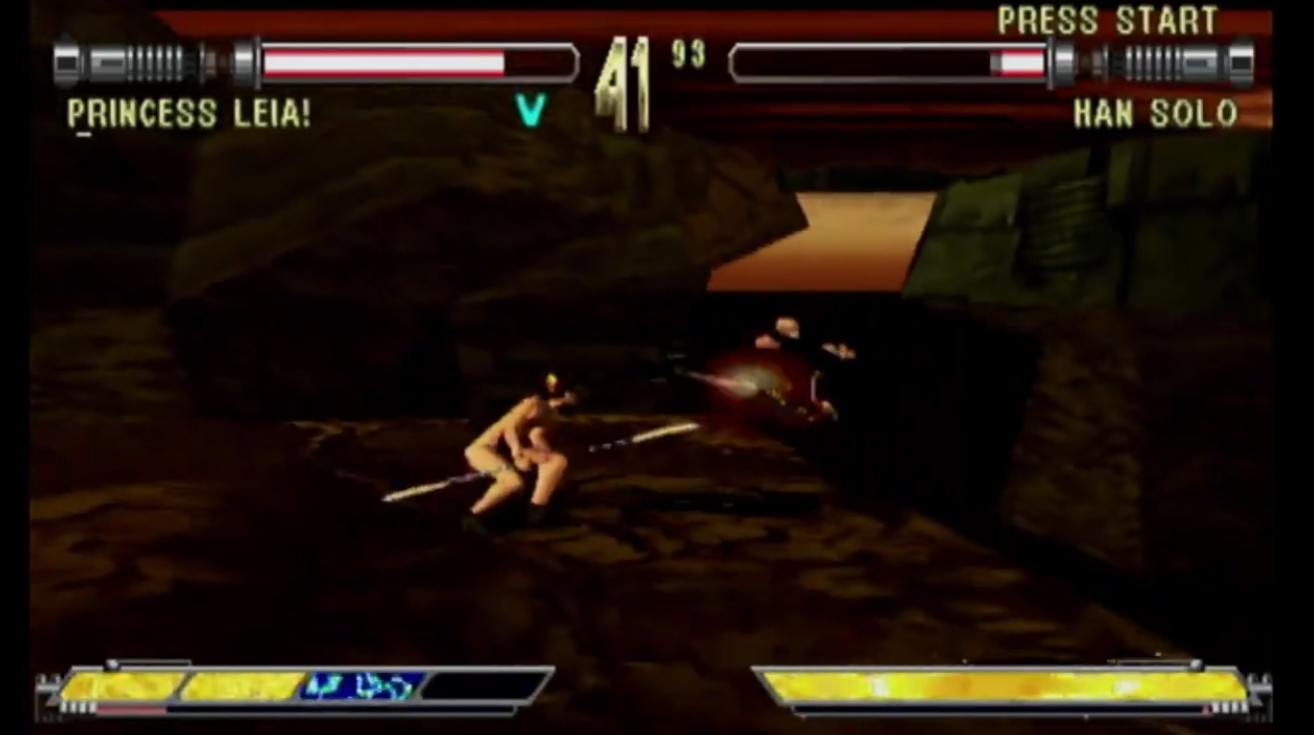
The movement was the real enemy.
The biggest problem wasn't the cast of characters, or the plot, or even the dubious idea of Han Solo fighting a lightsaber user.
It was movement.
Masters of Teras Käsi feel slow.
Unintentionally. Not heavy. Slowly.
Characters move as if the arenas are filled with invisible syrup. Attacks start with a delay. Combos are difficult to execute.Turning and dodging lack the precision of response needed in quality fighting games.
The game allowed you to move in and out of 3D space, like other fighting games of the period that took place in an arena. Players could dodge attacks, reposition themselves around opponents, win by knockout, survive until the timer expires, or force an enemy out of the arena.
I repeat, the list of functions looks quite decent.
The problem is what happens between the button press and the character's reaction.
GameSpot described the gameplay as frozen in slow motion and criticized the game's clumsy movements, boring combos, and wildly unbalanced special attacks. Their review gave the game a 4.4 out of 10, arguing that the Star Wars setting and art surrounded a combat system that simply didn't live up to expectations.
Criticism has haunted the game ever since because it perfectly highlights the main flaw.
The success or failure of fighting games depends on the reaction of the players.
A beautiful background from the planet Hoth can't save a punch that looks like it was submitted for approval just seconds ago.
The arenas had a better understanding of Star Wars than the fight scenes.
Visually, the game had better moments.
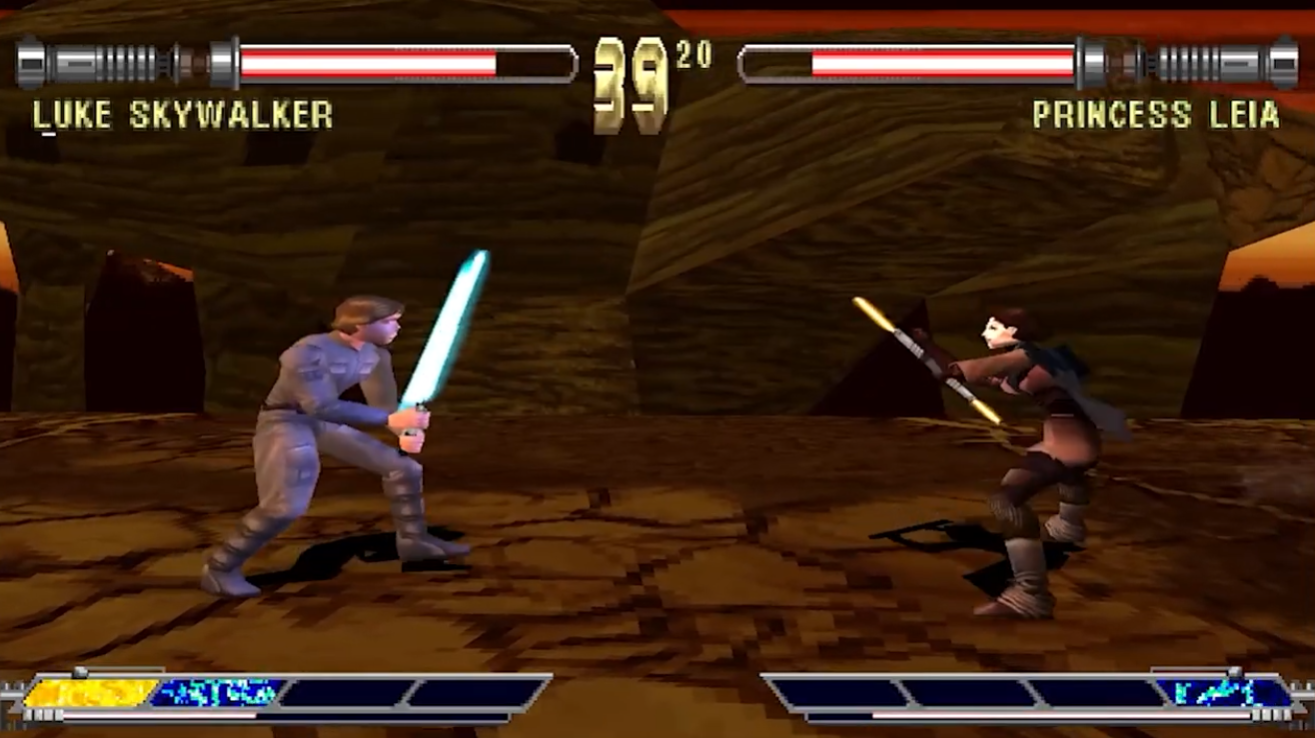
Battles took place in recognizable locations from the original trilogy including Hoth, Dagobah, the Death Star, Cloud City, and Endor.Some backgrounds included animated features such as AT-AT walkers, snowmobiles and moving ships, which helped the arenas feel like small windows into the larger Star Wars battles.
The character models are preserved exactly as you would expect from an early 3D PlayStation game.
Faces are depicted approximately.
Hands full of optimism.
Chewbacca looks like he was cut out of a particularly angry piece of carpet.
However, the visuals are unmistakably Star Wars. The environments, music, sound effects, weapons and costumes do most of the work. Even when the fights seem implausible, the environments usually look appropriate.
This explains why some contemporary reviews were more lenient than the game's later reputation would suggest. Critics who responded positively to it generally praised the atmosphere, recognizable locations, sound design, and attempt to combine armed and hand-to-hand combat.
There was a good game hidden somewhere in this concept.
It simply refused to leave its trailer.
LucasArts studied the PlayStation in public.
The history of creation makes it easier to understand the final result, although it does not necessarily make it more pleasant to perceive.
Masters of Teräs Käsi was created internally at LucasArts over the course of approximately 19 months. The team used Softimage to work on the characters and leveraged Industrial Light & Magic's motion capture capabilities, augmenting the captured movements with hand animation.The different character sizes created additional collision issues as the game needed to adapt fighters from humans to Chewbacca and Thok.
This difference in size seems trivial until you try to determine whether Leia's staff actually hit the huge Gamorrean or simply went through a polygon located somewhere near his shoulder.
The team also worked on LucasArts' first PlayStation game, while learning the console's limitations and development process. This is important.
Fighting games required high technical training. Responsive input, clear animations, a stable collision system, balanced characters, smooth performance and reliable multiplayer are required. LucasArts entered the genre without an established fighting game engine and without decades of PlayStation experience.
Meanwhile, the studios behind franchises like Tekken and Virtua Fighter relied on their specialized expertise.
LucasArts had Star Wars.
This provided a powerful advantage in marketing, but was completely useless when customizing hitboxes.
Motion capture technology could not save the rhythm.
Industrial Light & Magic's participation added prestige to the project.
Motion capture technology was used to create character animation, with additional manual work added when necessary.The team wanted attacks to logically follow controller input, so that pressing for a left-handed punch would result in the left arm moving rather than a random spinning punch.
This was a reasonable design goal.
Unfortunately, high-quality motion data does not guarantee high-quality animation in fighting games.
Realistic human movement and responsive combat animation are not the same thing. Fighting games often exaggerate movements, shorten transitions, cancel recovery frames, and distort reality to make attacks clear and effective.
The game Masters of Teräs Käsi is often a combination of simulator and arcade action.
It seems that the characters are performing some kind of movement.
They don't always feel like they're at war.
The difference is small when watching a video and huge when holding the controller in your hands.
The reviews were bad, but not everyone agreed.
In modern terms, Masters of Teräs Käsi is often called one of the worst Star Wars games ever.
Reaction to modern music was more mixed, although far from enthusiastic.
GameSpot openly expressed disappointment, praising the environment and sound design, but criticizing the twitchy models, sluggish combat system, weak combos, and broken special attacks.Critic ratings on MobyGames currently average around 60, reflecting a mix of harsh reviews and more favorable scores from outlets that liked the Star Wars visuals and weapon switching concept.
This division is quite logical.
As toys based on "Star Wars" the game is of interest.
He experiences difficulties as a professional fighter.
Put two fans in front of a screen for half an hour, and they might enjoy discovering new characters, laughing at unusual moves, and delving into the long-standing question of whether a Tusken raider can defeat Mara Jade.
Ask those same players to seriously study the game's mechanics over the course of a few weeks, and friendships can begin to deteriorate.
The license was not useless. She made the game interesting.
It couldn't make the game good.
It wasn't a failure. People forgot.
Many mediocre licensed games have disappeared.
The masters of Teras Kasi did not do this.
This is partly due to the name. Once you learn to pronounce Teräs Käsi, you will feel a strange, irresistible urge to use this name.
Part of the problem is the premise itself. The way Star Wars characters beat each other senseless remains instantly relatable, even when the execution leaves much to be desired.
This is partly due to the timing of the release. The game arrived during a landmark LucasArts era, allowing it to stand out from games that are remembered as classics.
And partly this is just a character trait.
This is a game in which in one composition Mara Jade, a Gamorrean guard, a Tusken raider named Hoar, Darth Vader, Leia in a bikini, Jodo Cast and Boba Fett.It has enough expanded universe confidence to fill a whole shelf of 1990s novels.
We've previously shown Masters of Teräs Käsi gameplay, and the game is still surprisingly fun for viewing. Even for those who don't want to play it, it's fun to see what happens as LucasArts tries to answer the questions no one has asked loud enough.
Can Chewbacca fight with a giant axe?
Apparently.
Can Han Solo survive a lightsaber combo?
If you choose the right difficulty level.
Should a Stormtrooper be able to defeat Darth Vader?
The Empire's performance evaluation process is about to become extremely uncomfortable.
Teras Kasi survived the game
The most amazing thing about this heritage is that the martial art itself has been preserved.
The term Teräs Käsi continued to appear in Star Wars histories and reference material long after the game had become synonymous with the disappointment of licensed fighting games. The term eventually entered the modern film canon throughSolo: A Star Wars Story, where Qi'ra refers to training in the discipline.
This is quite an achievement for an idea that many players first encountered in the game, where Luke Skywalker could be chased out of the arena by a pig-like guard.
The franchise has also returned to the fighting game genre in other forms.
Darth Vader, Yoda and Starkiller appeared in Soulcalibur IV.Later, The Clone Wars: Lightsaber Duelsattempted to introduce its own character-based combat system. Star Wars games continued to include duels, arena modes, and melee systems, but never released a proper sequel toMasters of Teräs Käsi.
The original remained untouched.
Not necessarily because the concept itself was bad.
Because this name has become radioactive.
Can modern masters of Teras Kasi work?
Absolutely.
The main idea is stronger now than in 1997.
The Star Wars universe has hundreds of recognizable fighters featured in films, television series, cartoons, novels, comics and games. A modern line-up could include Darth Maul, Ahsoka Tano, Mace Windu, Kylo Ren, Rey, Cal Kestis, the Grand Inquisitor, Bo-Katan, Baylan Skoll, Asajj Ventress, Din Djarin and several droids that would be incredibly difficult to balance.
The genre has also undergone evolution.
A new Star Wars fighting game could follow the example of the accessibility of Dragon Ball FighterZ, the cinematic style of modern Mortal Kombat, the combat system of Soulcalibur, or the chaotic structure of platform fighting games of Super Smash Bros.
It would require one thing that the original never achieved: a studio that truly understands fighting games.
Not only Star Wars.
This is not just animation.
This is not just an expensive presentation.
Fighting games.
Because this is a lesson from 1997. The famous lineup attracts people.But he doesn't teach Han Solo how to cancel his recovery animation.
Why “Masters of Teres Käsi” should be archived
It would be easy to write this game off as a failure and forget about it.
This would mean missing out on the fun.
Masters of Teräs Käsi represents LucasArts at its boldest and least prepared. The company saw the fighting game boom, realized that Star Wars could fit into the genre, and tried to create something completely new on hardware it was still learning.
The result is something imperfect, sluggish, unbalanced and often unintentionally funny.
But this was not a sign of laziness.
The developers created an original villain, created a character roster that combined movie icons with unusual characters from the Expanded Universe, experimented with switching between hand-to-hand and unarmed combat, used motion capture and filled the locations with recognizable spectacle scenes from Star Wars.
The desire for this is evident everywhere.
Problems too.
This is what makes the game memorable.
Great games show us what the studio understood.
Games like Masters of Teräs Käsi show us what she was still trying to learn.
The power was great.Frame data was missing
More than two decades later, Masters of Teräs Käsi remains one of the most recognizable bad Star Wars games.
It sounds cruel, but behind this reputation lies affection.
People remember this because the concept still excites the imagination. Making a full-fledged Star Wars fighting game is still a really good idea. Every new generation of fans looks at the franchise's massive cast of characters and eventually wonders why no one tried to do it again.
Then someone mentions Masters of Teras Kasi.
Silence reigns in the room.
The Gamorrean guard raises his axe.
Darth Vader's health bar begins to disappear.
And somewhere in the history of LucasArts, in the late 1990s, a series of events continues that are felt several seconds after the buttons are pressed.
Frequently asked questions
What is Star Wars: Masters of Teräs Käsi?
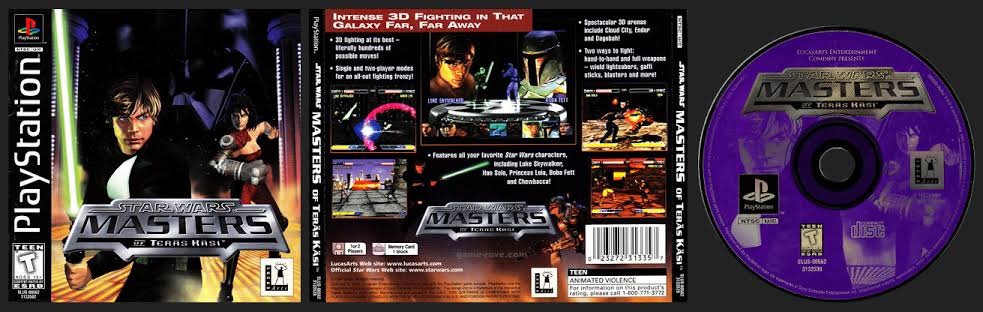
Star Wars: Masters of Teräs Käsi is a 3D fighting game developed and published by LucasArts for the original PlayStation in 1997. It features characters from the original trilogy and the Expanded Universe fighting in one-on-one arenas.
Was Masters of Teräs Käsi released on any platforms other than PlayStation?
No. It was released exclusively for the original Sony PlayStation.
Who is Arden Lyn?
Arden Lyn is an assassin and master of Teras Kyasi, created specifically for the game. In the story, the Emperor sends her to eliminate important members of the Rebel Alliance.
What characters are available to play in Masters of Teräs Käsi?
The list includes Luke Skywalker, Han Solo, Princess Leia, Chewbacca, Boba Fett, Arden Lyn, Hoar and Thok.Unlockable fighters include Darth Vader, Mara Jade, Jodo Kast, a Stormtrooper, and an alternate version of Leia.
What does Teräs Käsi mean?
The name is made up of Finnish words that are usually translated separately as “steel” and “hand”. In Star Wars, Teräs Käsi is an ancient martial art based on intense physical combat.
Why was Masters of Teräs Käsi poorly received?
Critics often complained about slow gameplay, unresponsive controls, awkward combos, character imbalances, and overly powerful special attacks. The Star Wars-inspired environments and visuals received more praise than the combat system itself.
Is Masters of Teräs Käsi a canon game?
The game and its story belong to the older Star Wars Expanded Universe, which is now classified as "Legends". However, the martial art of Teras Käsi itself was subsequently mentioned in the modern Star Wars canon.
Is Masters of Teräs Käsi worth playing today?
It's worth a try because it's part of Star Wars and LucasArts history, especially with another player. As a serious fighting game, it hasn't held up well over time, but its character roster, atmosphere, and novelty still make it fun for short play sessions.