

TIE Fighter Strategy Guide: When Star Wars Video Games Manuals Were Like Sacred Texts

There was a time when a Star Wars game didn't start with a tutorial pop-up, a glowing objective marker, and a cheery reminder that using the space bar can get you where you want to go.
Sometimes it all started with instructions. Instant. The one that really needed to be read.
Star Wars: TIE Fighter was released in 1994 and was not intended for players who wanted to slowly explore the expanses of the galaxy while the game quietly solved its problems. It was a space combat simulator from LucasArts, and you were expected to learn how to fly, operate shields, switch targets, redirect energy, understand pre-mission briefings, and survive long enough to make the Empire proud.
Or at least a little less disappointed.
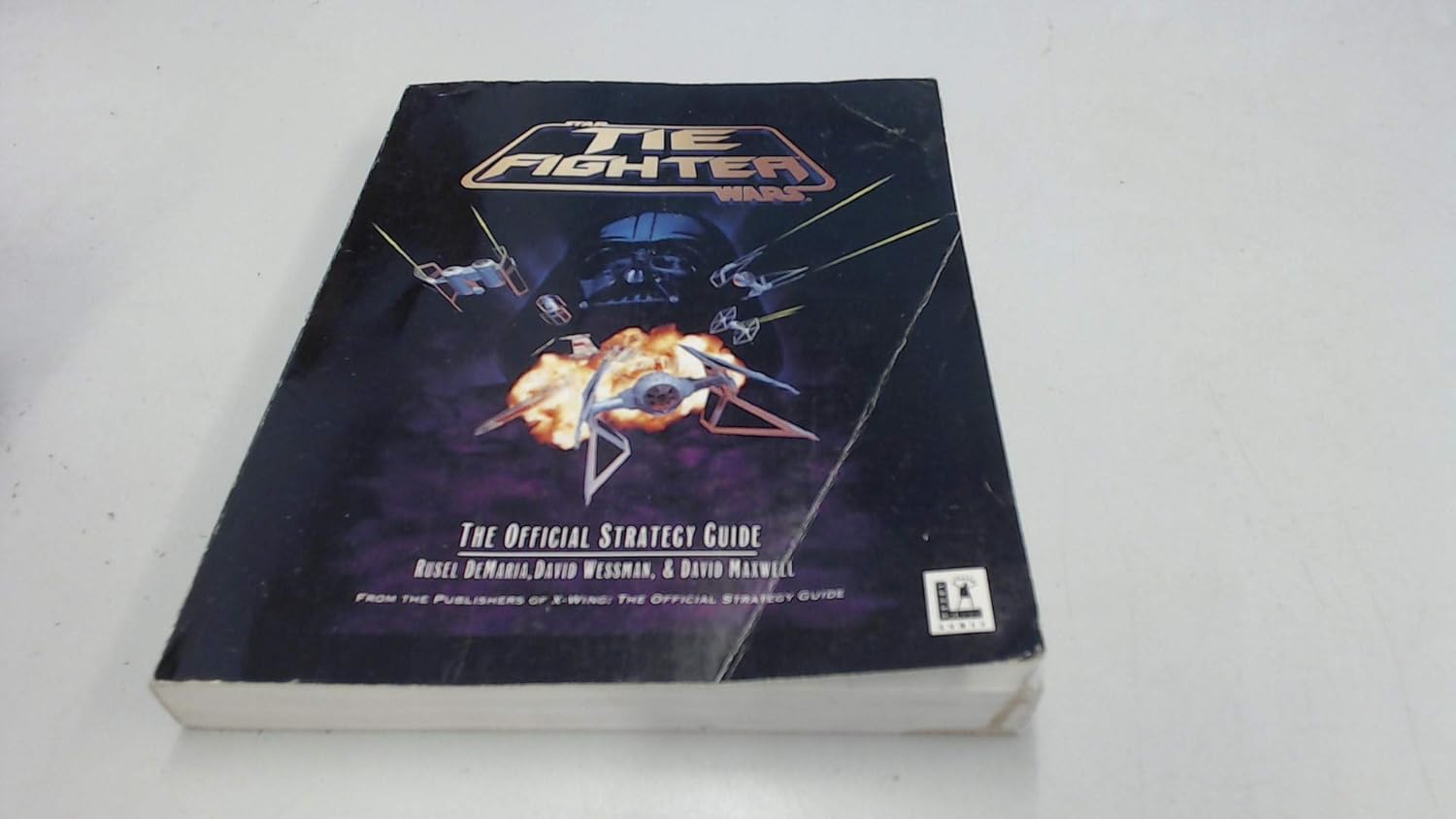
That's why TIE Fighter: The Official Strategy Guide is still seen as a wonderful artifact of the golden era of Star Wars video games. Published by Prima in July 1994 and written by Russell DeMaria, David Wessman, and David Maxwell, this guide existed because these games had their own flavor.
Yes, collectors can still find it today. If you want to have that good old Imperial guide on your shelf, TIE Fighter: The Official Strategy Guide can still be found on Amazon. Some collectors can also find the original CD-ROM edition of TIE Fighter here if you want the full experience without having to pay attention to the older ones.
This was not preparatory material.
Modern manuals are often perceived as optimization tools.
Best build. The fastest route. Ten things you missed. How to get something without losing the desire to live.
The strategy guide for TIE Fighter comes from another world.
This was an era when a game manual was part instruction manual, part document revealing the game's lore, part technical reference, and part psychological warning. You can ignore it if you want. The Rebel Alliance will be happy to explain the consequences to you as soon as possible.
TIE Fighter is an Imperial mission game with real-world control systems. You didn't just point at the red shapes and press the fire button.You had to understand your aircraft, your wingmen, your objectives, your bonus objectives, and the difference between heroic confidence and being destroyed because you forgot what a missile boat can do.
For a full analysis of the game itself, our archive material Star Wars: TIE Fighter 1994 explains why LucasArts' space simulator of the Empire still occupies such a high place in the history of games based on the Star Wars universe.
On the official Star Wars support page, TIE Fighter is still listed as being released in 1994 and simply describes its concept as "Serve the Emperor, join the Imperial Navy, and save the galaxy."
This is a very imperial way of saying: please ignore all civilian casualties and focus on the success of the mission.
LucasArts got you paying attention
This is what made this period in the world of Star Wars computer games so special.
LucasArts trusted players to do a little work.
Games like X-Wing and TIE Fighter didn't aim for the impossible, but respected the fantasy element enough that the player deserved to win. Controlling a starfighter was not like driving a supermarket cart with lasers. You had instruments, mission objectives, power systems, target priorities, and enough keyboard commands to make your desktop look like a rebel spy cell.
Strategic leadership fits seamlessly into this design.
This was not done just to spoil the impression of the missions. This was done to help players understand the language of the game. How to approach a fight. Which threats are of primary importance. When to protect transport. When to disable a ship. When to stop chasing kills because the real target is quietly falling through the cracks somewhere off-screen.
Cruel? Perhaps.
Memorable?Absolutely.
The Empire received the best campaign
Another reason why TIE Fighter still stands out today is because it did something that Star Wars games rarely did at the time.
This made it possible to play as the Empire without turning the whole thing into a joke.
You weren't just a "bad guy" for the sake of novelty. You were an Imperial pilot in a campaign where order, duty, loyalty and ambition were at the center of the story. It was propaganda, hierarchy, medals, secret orders and mission success, wrapped up in one of the best space combat games LucasArts has ever created.
This approach gave the game an individuality that is still felt very keenly even decades later.
Our complete list of every Star Wars game ever made is full of experiments in the genres of shooters, role-playing games, strategy, racing, arcade games and MMOs, butTIE Fighterremains one of the strongest examples of Star Wars games taking specific fantasy themes seriously.
This is not a Jedi fantasy.
This is not a smuggler's fantasy.
Fantasy of an Imperial cockpit.
And it worked.
The guides were part of the magic.
There is something almost romantic about the fact that running a big computer game requires manuals, instructions, reference cards and patience.
Not because older games were automatically better. Many of them were just strange little goblins. But because in the best of them the surrounding game world was perceived as part of the whole.
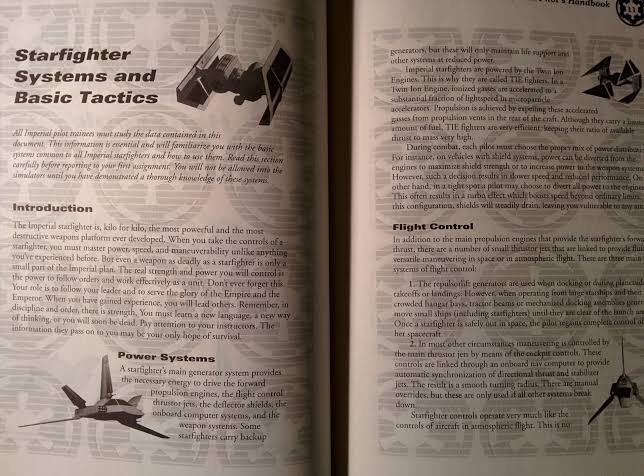
The Strategy Guide for TIE Fighter was more than just a cheat sheet.It was an extension of the cockpit. Field Guide. A way to explore the galaxy before throwing yourself into yet another mission where three things will go wrong before the briefing can end echoing in your head.
Such a design is rare now.
Today, most games strive to smooth out the rough edges. Eliminate friction. Reduce confusion. Guide the player. Constantly encourage. Maintain a dynamic pace.
TIE Fighter belonged to an era when in computer games based on the Star Wars universe you could still say: no, read the briefing again.
And to be honest, it was true.
Why the TIE Fighter is still important
Thirty years later, TIE Fighter is still considered one of the greatest Star Wars games because it understood that fantasy was about more than just iconography.
We are talking about systems.
The sound of lasers matters. The cabin matters. The target indicator matters. Task briefing matters. The feeling of being one of the pilots inside a huge war machine makes a difference. Equally important is the instructor sitting next to the keyboard, silently judging you for not checking the secondary tasks.
That's why this old strategy guide still feels like more than just a relic of the past.
This is a reminder of the times when computer games based on the Star Wars universe encouraged players to meet them halfway.
And if you did this, you got something that is still difficult for modern teaching aids to reproduce:
The feeling that you really learned to fly in the service of the Empire.